Português
 English
 Español
 عربي
عربي 한국어
한국어

O terrazzo é frequentemente escolhido por sua cor, padrão de agregados e caráter arquitetônico. Mas, antes de comparar amostras ou preços, os compradores precisam esclarecer uma questão fundamental: o projeto utiliza terrazzo de cimento ou terrazzo de resina? Esses dois sistemas podem parecer semelhantes em fotos, mas podem apresentar comportamentos distintos em termos de produção, instalação, controle de cor, espessura, peso, adequação para ambientes internos ou externos e manutenção a longo prazo.
O problema não é que um sistema seja sempre melhor que o outro. O verdadeiro problema reside em escolher um sistema de terrazzo sem confirmar as condições do projeto. Um ladrilho de terrazzo para o piso interno de uma loja, uma placa pré-moldada para uma bancada, um degrau de escada para um hotel e uma área de pavimentação semiaberta podem exigir decisões técnicas diferentes. Se o sistema de materiais não estiver claro na fase de orçamento, o comprador pode comparar preços que não são verdadeiramente comparáveis.
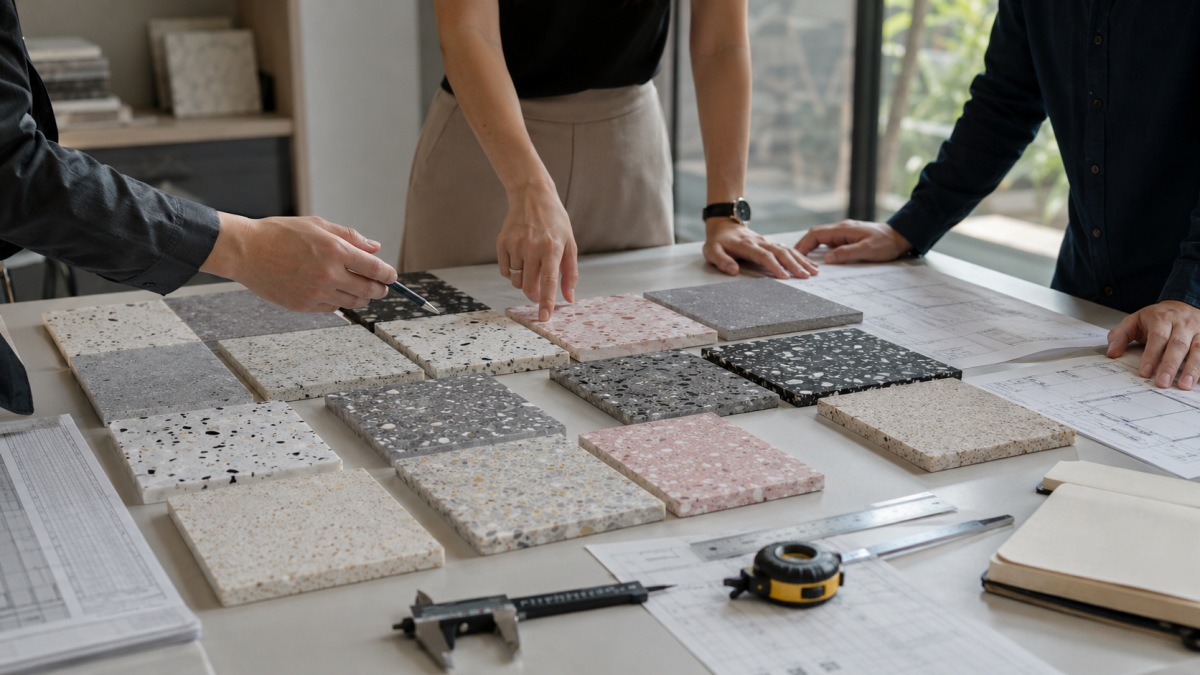
Muitos compradores usam a palavra "terrazzo" como se ela descrevesse um único material. Em projetos reais, terrazzo pode se referir a diferentes sistemas, incluindo terrazzo à base de cimento, terrazzo à base de resina, terrazzo epóxi, placas pré-fabricadas de terrazzo, ladrilhos de terrazzo, bancadas, escadas e pisos moldados in loco.
Isso gera confusão porque o padrão da superfície pode parecer semelhante. Tanto o terrazzo de cimento quanto o terrazzo de resina podem conter lascas de mármore, lascas de vidro, agregados de pedra, partículas recicladas ou combinações de cores personalizadas. Mas o sistema de ligação por trás da superfície altera muitas decisões do projeto.
Um comprador pode aprovar a cor de um piso de terrazzo a partir de uma foto, sem saber se o material é à base de cimento ou de resina. Posteriormente, surgem dúvidas:
·Pode ser usado ao ar livre?
·A cor base pode ser muito brilhante ou pura?
·Qual a espessura adequada?
·É pesado ou leve?
·Precisa ser selado?
·É fornecido em forma de ladrilhos, placas, bancadas ou pisos moldados in loco?
·Qual método de instalação é necessário?
·Quem é o responsável em caso de rachaduras, manchas, alteração de cor ou falha na instalação?
Essas questões devem ser esclarecidas antes da cotação, e não após a produção.
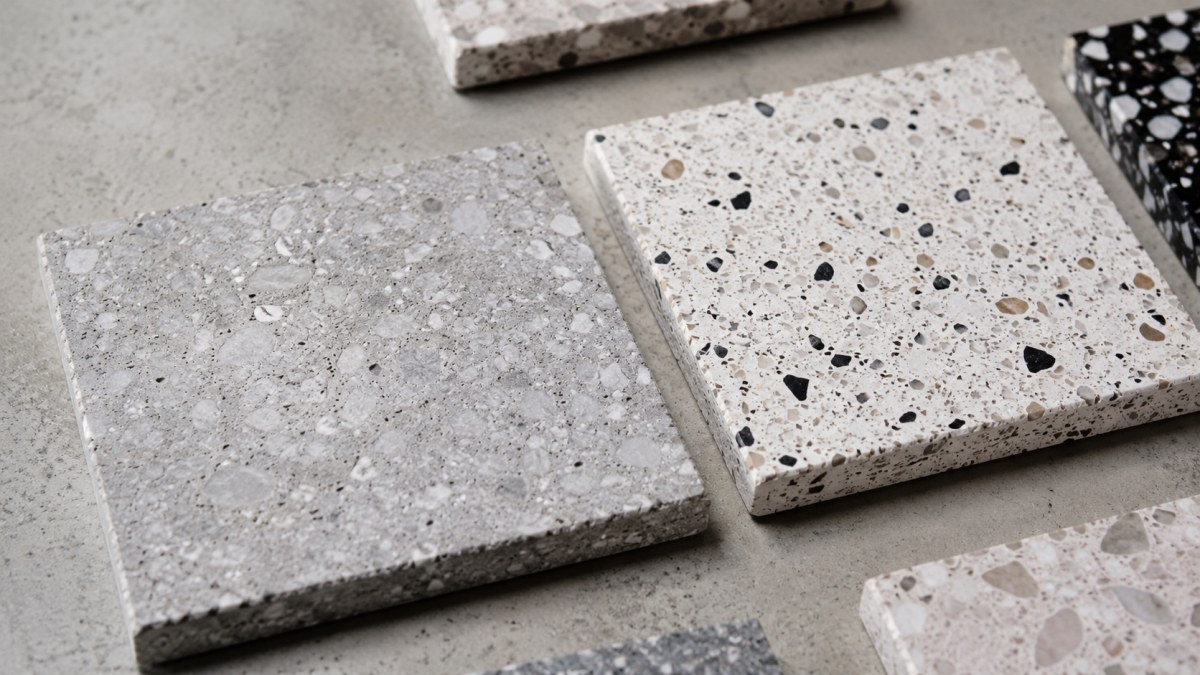
O primeiro ponto que os compradores devem esclarecer é o sistema de aglutinante. O terrazzo de cimento utiliza um aglutinante cimentício. O terrazzo de resina utiliza um aglutinante resinoso, geralmente epóxi ou outros sistemas à base de polímeros, dependendo do produto e do fabricante.
Isso não é apenas um rótulo técnico. O aglutinante influencia as possibilidades de cor, o comportamento de cura, a espessura, a resistência, o peso, o comportamento em relação à umidade, a manutenção e a área de aplicação adequada.
Os compradores devem solicitar ao fornecedor que indique claramente se o terrazzo é à base de cimento, resina, epóxi ou outro sistema específico.
A área de aplicação é o fator decisivo mais importante. O terrazzo de cimento é frequentemente considerado para pisos, ladrilhos, lajes, escadas e algumas áreas externas ou semi-externas, quando o produto e o sistema de instalação são adequados. O terrazzo de resina é geralmente escolhido para aplicações internas, onde o controle de cor, sistemas mais finos, flexibilidade de design ou um acabamento mais liso são importantes.
Para áreas externas, semiabertas, úmidas, com alta exposição aos raios UV, sujeitas a ciclos de congelamento e descongelamento ou com tráfego intenso, o comprador não deve presumir que o terrazzo de resina seja automaticamente adequado. É necessário verificar o sistema de resina específico, a resistência aos raios UV, a resistência ao deslizamento, a exposição à água, a drenagem e os requisitos de manutenção.
Um sistema de terrazzo deve ser escolhido de acordo com as condições do projeto, e não apenas pela cor.
As condições internas e externas criam riscos muito diferentes. Os espaços internos geralmente têm temperatura, umidade, luz solar e manutenção mais controladas. Os espaços externos ou semiabertos podem estar sujeitos à exposição aos raios UV, chuva, movimentação térmica, umidade, poluição e produtos químicos de limpeza.
O terrazzo de cimento pode ser mais apropriado para algumas condições externas ou semi-externas, mas isso ainda depende do design do produto, acabamento, selagem, instalação, drenagem e clima local. O terrazzo de resina pode oferecer um controle de cor atraente para interiores, mas os compradores devem se informar cuidadosamente antes de usá-lo em áreas externas expostas.
Não escreva "para uso externo" em uma especificação apenas porque a amostra parece resistente. A adequação para uso externo deve ser confirmada como um sistema completo.
O terrazzo de resina oferece grande flexibilidade de cores, cores de base vibrantes e efeitos de design controlados. Pode ser uma opção atraente para hotéis, lojas, restaurantes, escritórios, showrooms e interiores comerciais modernos.
O terrazzo de cimento geralmente apresenta um caráter mais mineral, arquitetônico e natural. Sua cor base pode ser ligeiramente menos "perfeita" do que a dos sistemas de resina, mas isso pode fazer parte da identidade do material.
Os compradores devem esclarecer se a intenção do projeto exige uma cor de base muito pura, uma aparência de cimento natural, um padrão com lascas grandes, agregados reciclados, pintas finas ou o caráter tradicional do terrazzo.
A seleção de cores deve ser aprovada com amostras físicas, e não apenas com imagens digitais.
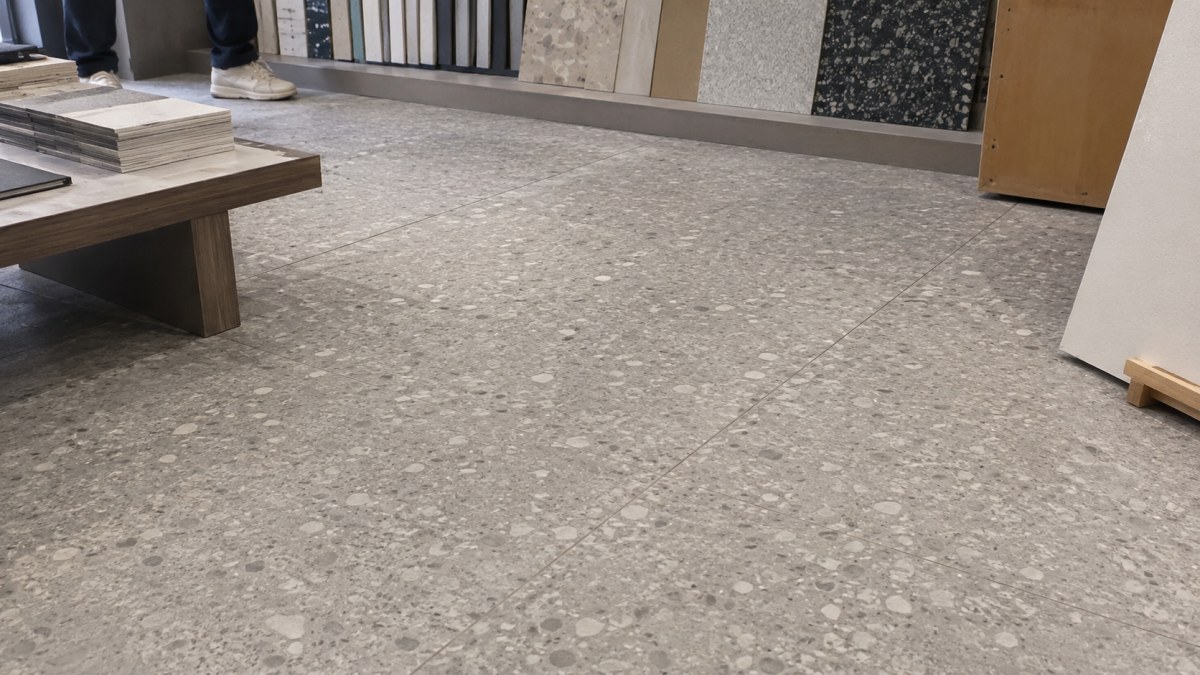
O terrazzo de cimento e o terrazzo de resina podem seguir lógicas de espessura diferentes. Os sistemas à base de resina são frequentemente associados a aplicações mais finas em certos sistemas de piso, enquanto os ladrilhos, placas, escadas e bancadas de terrazzo de cimento podem exigir espessuras diferentes dependendo do uso e da fabricação.
Para projetos de exportação que utilizam ladrilhos ou placas pré-fabricadas de terrazzo, os compradores não devem presumir que a mesma espessura seja adequada para todos os sistemas. Painéis de parede, ladrilhos de piso, bancadas, degraus de escada e placas grandes devem ser avaliados individualmente quanto ao tamanho, condições de suporte, detalhes das bordas e método de instalação.
A espessura não é apenas uma questão de custo. Ela afeta a produção, a embalagem, o transporte, o manuseio, a instalação, a resistência das bordas e o risco de quebra.
Alguns tipos de terrazzo são moldados in loco. Outros são fornecidos como ladrilhos pré-fabricados, placas, peças para escadas ou bancadas. Alguns sistemas requerem lixamento e polimento após a instalação. Outros já vêm com acabamento antes do envio.
Os compradores devem esclarecer:
·O terrazzo é fornecido em forma de ladrilhos pré-fabricados ou placas?
·Foi projetado para instalação no local?
·É necessário lixar e polir no local?
·Que adesivo, argamassa, substrato ou método de fixação é esperado?
·O instalador tem experiência com esse sistema de terrazzo?
·São necessárias juntas de dilatação, divisórias ou planejamento de layout?
Uma boa especificação de terrazzo deve conectar o sistema de materiais e o método de instalação.
O terrazzo de cimento e o terrazzo de resina podem ter necessidades diferentes de selagem e manutenção. Os sistemas à base de cimento podem ser mais porosos e necessitar de selagem e manutenção adequadas, dependendo da aplicação. Os sistemas de resina podem apresentar diferentes perfis de resistência, mas não se deve presumir que sejam isentos de manutenção.
Os compradores devem perguntar qual o método de limpeza recomendado, quais produtos químicos devem ser evitados, se é necessário selar o material e quem é o responsável pela manutenção após a instalação.
Uma bela superfície de terrazzo pode apresentar problemas de uso se as expectativas de manutenção forem inadequadas.
Esta tabela serve como um guia prático para discussão. Não se trata de uma regra universal. A seleção final deve levar em consideração o tipo de produto, os desenhos do projeto, o sistema de instalação, as normas locais e a confirmação do fornecedor.
Ponto de decisão | Terrazzo de cimento | Terrazzo de resina |
Sistema de encadernação | Aglomerante cimentício | Aglutinante à base de resina ou polímero |
Característica visual | Mais mineral, arquitetônico, com toque de cimento natural. | Geralmente mais limpo, mais luminoso e com maior flexibilidade de design. |
Controle de cor | Bom, mas o tom base pode ter uma variação mais natural. | Geralmente, há um controle mais preciso para cores brilhantes ou saturadas. |
Uso interno | Geralmente utilizado quando o produto e a instalação são adequados. | Comumente usado em aplicações de design de interiores. |
Uso externo | Frequentemente considerado mais adequado, mas ainda precisa de confirmação. | Deve ser verificado cuidadosamente; não é automaticamente adequado para uso externo exposto aos raios UV ou a raios solares. |
Lógica de espessura | Geralmente mais pesado e pode exigir uma análise estrutural mais aprofundada. | Em alguns sistemas, pode ser mais fino, dependendo do produto e da aplicação. |
Peso | Geralmente mais pesado em formatos comparáveis. | Frequentemente mais leve em alguns sistemas finos |
Umidade e vedação | É necessário esclarecer os procedimentos de vedação e manutenção. | O perfil de resistência depende do tipo de resina e do sistema de superfície. |
Instalação | Podem ser pré-fabricados ou moldados in loco, dependendo do projeto. | Frequentemente utilizado em aplicações internas de argamassa fina ou pré-fabricados, dependendo do fornecedor. |
Melhor ajuste | Aparência arquitetônica natural, pisos, escadas, lajes, alguns usos semi-externos, se adequados. | Design de interiores comerciais, controle rigoroso de cores, superfícies decorativas personalizadas. |
Risco principal | Porosidade, cura, fissuras, peso, movimento de instalação | Exposição aos raios UV, sensibilidade ao calor, adequação da resina, compatibilidade química |
A decisão mais segura não é "cimento é melhor" ou "resina é melhor". A decisão mais segura é escolher um sistema de terrazzo que seja adequado às condições do projeto.
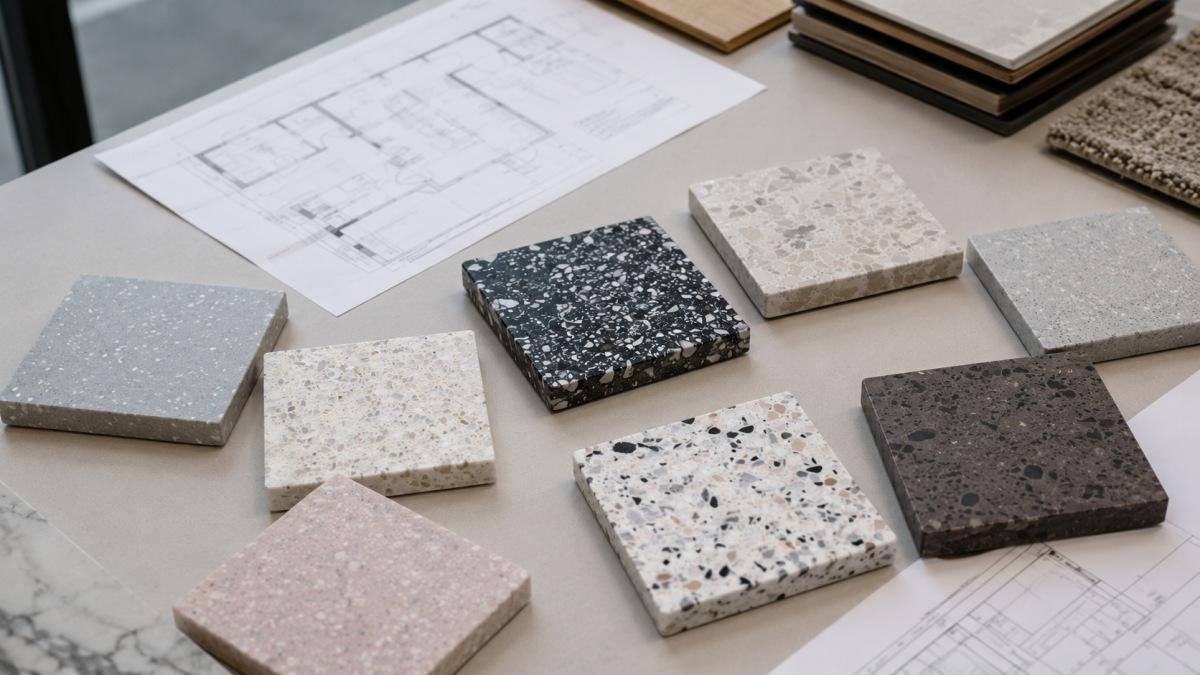
Um orçamento para terrazzo de cimento e um orçamento para terrazzo de resina podem não incluir o mesmo sistema de materiais, espessura, acabamento, expectativas de instalação, método de aplicação ou projeções de desempenho. Se os compradores compararem apenas o preço final, podem escolher o sistema errado para o projeto.
A comparação de preços deve começar após a comparação de sistemas.
O terrazzo de resina pode ser excelente para muitas aplicações internas, mas o uso em áreas externas expostas deve ser cuidadosamente avaliado. A exposição aos raios UV, a chuva, as variações de temperatura, a drenagem e o acabamento da superfície podem afetar o desempenho a longo prazo.
Os compradores não devem aprovar o uso de terrazzo de resina em áreas externas apenas porque a amostra parece atraente.
O terrazzo de cimento pode ser resistente e adequado para diversas aplicações arquitetônicas, mas ainda assim requer selagem, instalação, limpeza e manutenção adequadas. Se a superfície for utilizada em cozinhas, restaurantes, pisos públicos ou áreas úmidas, as expectativas de manutenção devem ser bem definidas.
Durabilidade não significa ausência de manutenção.
O mesmo agregado pode apresentar aparência diferente em ligantes de cimento e resina. A cor base, a profundidade, o contraste, o brilho e a exposição do agregado podem variar. O comprador não deve aprovar a indicação visual sem conhecer o sistema de materiais subjacente à amostra.
A aprovação da cor deve incluir o sistema de aglutinante, o acabamento, o agregado e a espessura.
Mesmo um material de terrazzo adequado pode falhar se o instalador não compreender a preparação do substrato, a seleção do adesivo, as juntas de dilatação, os requisitos de polimento ou a proteção após a instalação.
A seleção de materiais e a capacidade de instalação devem ser analisadas em conjunto.
Ladrilhos, placas, escadas e bancadas de terrazzo pré-fabricados são produzidos antes do envio. O terrazzo moldado in loco é instalado e finalizado no local. Suas responsabilidades, riscos, prazos de entrega, controle de qualidade e pontos de inspeção são diferentes.
Os compradores devem esclarecer se estão adquirindo produtos acabados, peças semiacabadas ou um sistema de instalação completo.
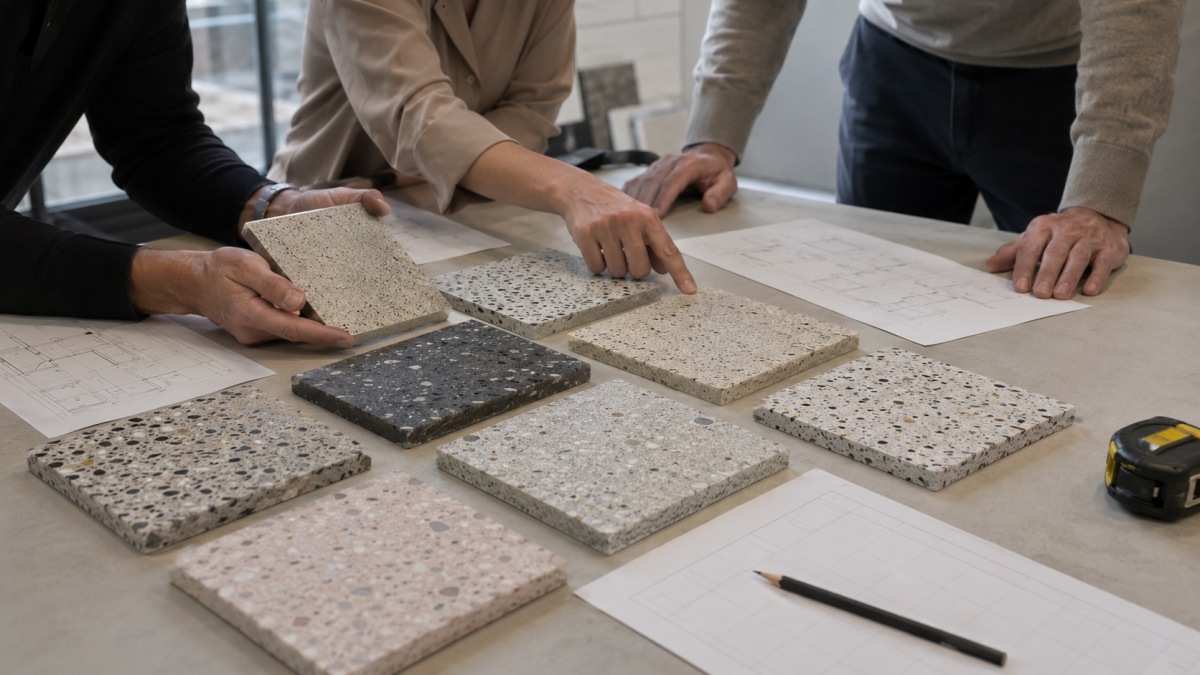
Responsabilidades claras ajudam a prevenir disputas após a entrega ou instalação.
Emitir | Responsabilidade do Fornecedor | Responsabilidade do instalador |
Sistema de materiais | Indique claramente se o sistema utilizado é o de terrazzo de cimento, terrazzo de resina, terrazzo epóxi ou outro. | Confirme se o sistema especificado atende aos requisitos do local e do projeto. |
Aprovação de amostra | Fornecer amostra física ou amostra de produção quando necessário. | Analise a amostra com o comprador, designer ou equipe do projeto. |
Espessura e formato | Produzir de acordo com a espessura, tamanho e tolerância aprovados. | Verificar manuseio no local, substrato, suporte e método de instalação |
Adequado para uso interno e externo | Informe sobre as limitações conhecidas e solicite detalhes sobre a aplicação. | Confirme a exposição do local, a drenagem, os raios UV, o substrato e os padrões de instalação locais. |
Acabamento da superfície | Acabamento aprovado para produção: polido, fosco, escovado ou antiderrapante. | Proteja o acabamento durante a instalação e a limpeza. |
Conselhos sobre vedação e manutenção | Forneça recomendações gerais de cuidados e vedação, quando aplicável. | Aplicar os selantes necessários ou realizar o processo de manutenção, se incluído no escopo do local. |
Embalagem e envio | Embale de acordo com o tamanho da peça, a espessura e o risco de quebra. | Descarregar, armazenar e movimentar as peças corretamente no local. |
Falha na instalação | Não nos responsabilizamos por substratos inadequados ou adesivos incorretos, a menos que estejam incluídos no escopo do serviço. | Responsável pela preparação do substrato, colagem, nivelamento, juntas, limpeza e proteção. |
Última aparição | Responsável pela qualidade da produção dentro da faixa de amostra aprovada. | Responsável pela sequência de layout, alinhamento das juntas, revisão da iluminação do local e limpeza da instalação. |
O fornecedor não deve simplesmente dizer “sim” a todas as solicitações. Se as condições do projeto não estiverem claras, o fornecedor deve solicitar mais detalhes antes de recomendar o terrazzo de cimento ou resina.
O instalador não deve presumir que todos os sistemas de terrazzo sejam instalados da mesma maneira. O terrazzo de cimento e o de resina podem exigir diferentes etapas de preparação do local, fixação, cura, polimento, selagem ou proteção.
Antes de aprovar um sistema de terrazzo, os compradores devem verificar:
·O terrazzo é à base de cimento, resina, epóxi ou outro sistema?
·O projeto se destina a ambientes internos, externos, semiabertos, áreas úmidas ou áreas com alta incidência de raios UV?
·O material é fornecido na forma de ladrilho pré-moldado, placa, bancada, peça para escada ou piso moldado in loco?
·Em que área de aplicação será utilizado?
·Quais são as dimensões, espessura e acabamento necessários?
·O design foca-se no caráter mineral natural ou no controlo rigoroso da cor?
·É necessária uma amostra física ou uma amostra de produção?
·A superfície precisa de tratamento antiderrapante?
·A área está exposta à água, óleo, manchas de comida, produtos químicos ou limpeza pesada?
·É necessário selar antes ou depois da instalação?
·Qual método de manutenção é recomendado?
·Que tipo de substrato ou suporte é esperado?
·O instalador tem experiência com o sistema selecionado?
·São necessárias juntas de dilatação, divisórias ou desenhos de layout?
·São necessárias fotos de pré-embarque, fotos de produtos em exposição a seco ou fotos de lote?
·Quem é responsável pela vedação, limpeza, proteção e manutenção do local?
Se essas perguntas não forem respondidas, o projeto não está pronto para um orçamento confiável de terrazzo.
Para receber um orçamento mais preciso, os compradores devem enviar:
·Área de aplicação do projeto
·Condições para ambientes internos, externos, semiabertos ou úmidos.
·Sistema de terrazzo preferencial, caso já tenha sido especificado.
·Requisitos para imagens de referência ou amostras físicas
·Cor base e preferência de agregados
·Dimensões, espessura e acabamento necessários
·Desenhos para ladrilhos, placas, escadas, bancadas ou peças cortadas sob medida.
·Nível de tráfego e tipo de projeto
·Requisitos de superfície, como polido, acetinado, fosco, escovado ou antiderrapante.
·expectativas de manutenção ou vedação
·Método de instalação, se conhecido
·Especificação local ou exigência do arquiteto
·Requisitos de embalagem, etiquetagem, montagem a seco ou fotos pré-embarque
Um pedido claro ajuda o fornecedor a entender se deve ser discutido o terrazzo de cimento, o terrazzo de resina ou outro sistema de terrazzo.
Se o seu projeto exigir ladrilhos de terrazzo, placas, bancadas, escadas, painéis de parede ou peças cortadas à medida, Envie suas especificações para análise. Antes de confirmar o sistema de materiais, inclua a área de aplicação, se é para uso interno ou externo, o tamanho, a espessura, o acabamento, a preferência por agregados, desenhos e as expectativas de manutenção. Uma especificação clara ajuda a determinar se o terrazzo de cimento ou o terrazzo de resina é mais adequado para o projeto antes da cotação e da produção.
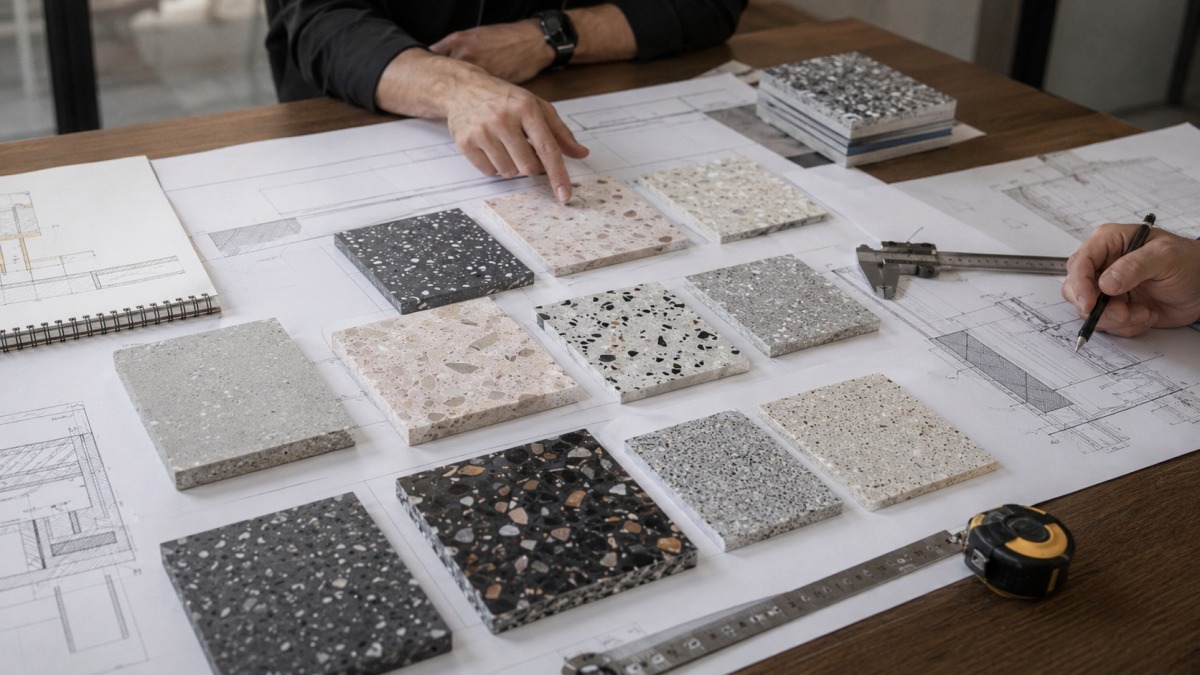
Nem sempre. O terrazzo de cimento e o terrazzo de resina atendem a necessidades diferentes de cada projeto. A melhor escolha depende da área de aplicação, se é para uso interno ou externo, da cor desejada, da espessura, do método de instalação e da expectativa de manutenção.
Não se deve presumir nada. O terrazzo de resina deve ser cuidadosamente verificado quanto à exposição aos raios UV, variações de temperatura, umidade, acabamento superficial e recomendações do fabricante antes de ser utilizado em áreas externas.
Não. O terrazzo de cimento pode ser mais adequado para algumas condições externas ou semi-externas, mas o design do produto, a vedação, a drenagem, o acabamento, a instalação e o clima local ainda são importantes.
Os sistemas de resina geralmente oferecem maior controle da cor base e efeitos de design mais vibrantes. No entanto, o resultado exato depende do tipo de resina, pigmento, agregado, acabamento e amostra de produção.
Não. A aparência é apenas um dos fatores a serem considerados. Os compradores também devem verificar o sistema de fixação, a espessura, a aplicação, o método de instalação, a manutenção, a vedação e os limites de responsabilidade.



 IPv6 SUPORTADO POR REDE