Português
 English
 Español
 عربي
عربي 한국어
한국어

Alterar um material de pedra específico nem sempre é um erro. Em projetos comerciais, de hotelaria, residenciais e de varejo reais, as mudanças de materiais frequentemente ocorrem devido a restrições orçamentárias, incertezas no fornecimento, variações na pedreira, preocupações com manutenção, prazos de entrega, limitações de fabricação ou otimização de custos. O verdadeiro risco não está em escolher uma pedra alternativa. O verdadeiro risco está em escolhê-la sem entender o que o material original deveria proporcionar ao espaço.
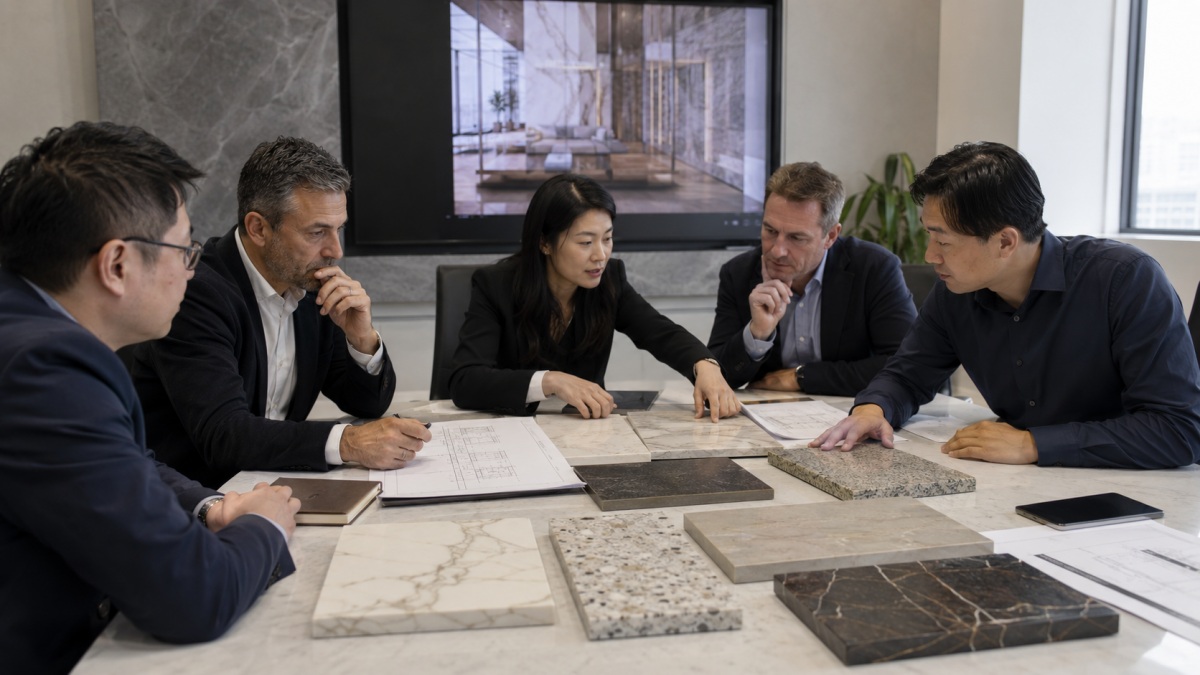
Uma substituição superficial começa com uma foto que parece "suficientemente semelhante". Uma substituição profissional começa com uma pergunta: o que deve permanecer inalterado para que o projeto ainda mantenha a essência do design original?
Essa diferença importa. Mármore, quartzo, mármore artificial, terrazzo, calcário ou pedra sinterizada podem ser tecnicamente adequados em algumas condições, mas não possuem o mesmo impacto visual, profundidade natural, comportamento da superfície, expectativa de manutenção ou mensagem do projeto. substituição de material pétreoO objetivo não é encontrar uma cópia mais barata. O objetivo é proteger a intenção do projeto, tomando uma decisão mais realista em termos de produção, instalação, orçamento e uso a longo prazo.
Por que materiais alternativos à pedra são considerados em projetos reais?
A substituição de materiais geralmente ocorre quando o projeto passa da fase de conceito para a de execução. Na fase de conceito, um designer pode escolher um belo mármore natural, calcário, terrazzo ou outra pedra com base em inspiração, imagens de referência e na direção geral da marca. Posteriormente, o comprador precisa lidar com quantidade, disponibilidade de placas, preço, frete, aproveitamento de corte, manutenção, cronograma de instalação e risco de aprovação.
Os motivos mais comuns incluem:
O preço original da pedra ultrapassou o orçamento após a confirmação das quantidades finais.
O material extraído na pedreira é instável ou não suporta o volume total do projeto.
O prazo de entrega não coincide com o cronograma de construção.
A gama de cores é mais ampla do que o cliente esperava.
O material é visualmente bonito, mas não é o ideal para a aplicação.
As expectativas de manutenção não são realistas para o usuário final.
O projeto original precisa de otimização de custos sem comprometer a atmosfera.
Uma substituição não é uma questão de desconto. É uma decisão controlada de reformulação.
É por isso seleção alternativa de pedras A gestão do processo não deve ser feita apenas pela área de compras. Deve envolver o projetista, o comprador, o fornecedor, o empreiteiro e, às vezes, o instalador. Cada parte enxerga um risco diferente. O projetista vê a intenção visual. O comprador vê o custo e o cronograma. O fornecedor vê a realidade dos materiais e da fabricação. O empreiteiro vê as consequências da instalação. Uma boa decisão conecta todos os quatro.
Comece pela intenção do projeto com pedra, não pelo nome do material.
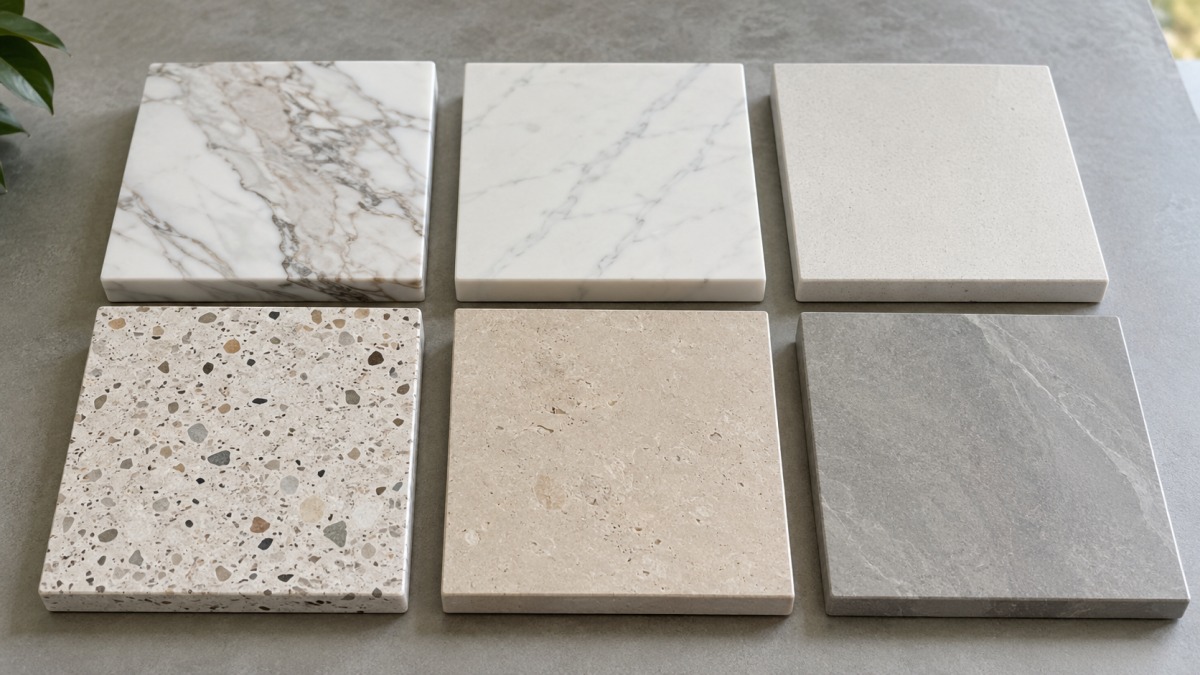
O primeiro erro é tratar o nome original do material como a intenção do projeto. Não é.
Um projeto pode especificar mármore branco, mas a intenção real pode ser luminosidade, luxo, veios cinza suaves, profundidade natural ou um pano de fundo sereno para os móveis. Outro projeto pode especificar calcário, mas a intenção pode ser aconchego, textura discreta, suavidade fosca e sobriedade arquitetônica. Um terrazzo pode ser escolhido não simplesmente por ser terrazzo, mas porque o designer deseja ritmo visual, caráter agregado e repetição controlada em um piso amplo.
Antes de discutir opções de substituição de mármoreDefina qual era a função do material original no projeto.
Faça estas perguntas:
A pedra foi concebida para ser o foco visual ou um pano de fundo discreto?
O principal valor avaliado foi a variação natural, os veios marcantes, o tom quente, a repetibilidade ou a durabilidade?
O material será visto de perto, à distância ou em uma grande superfície contínua?
A aplicação é em piso, parede, bancada, escada, balcão de recepção, banheiro, revestimento externo ou mobiliário?
O projeto exige forte movimentação de padrões ou consistência controlada?
O usuário final aceitará a variação natural ou espera um resultado mais previsível?
O acabamento é polido, acetinado, com textura de couro, escovado, jateado, flameado ou fosco?
Caso essas questões não sejam respondidas, a equipe poderá aprovar um material que pareça aceitável em uma pequena amostra, mas que cause desconforto após a instalação.
Uma amostra de pedra pode mostrar cor. Mas nem sempre revela a intenção.
Defina o que não pode mudar.
Toda substituição deve separar o "deve ser mantido" do "pode ser ajustado". É aqui que muitas equipes de projeto economizam dinheiro corretamente — ou arruinam o projeto original por acidente.
Um recurso útil aprovação de material do projetoO processo deve definir as partes não negociáveis do projeto antes que as alternativas sejam analisadas.
Matriz de Intenção do Projeto
Requisito Original | Deve Ser Preservado | Pode Ser Ajustado | Necessária Comprovação Mármore branco natural para parede do hall de entrada | Fundo branco elegante, veios suaves, impressão premium | Nome exato da pedreira, pequena variação de tonalidade | Fotos de placas grandes, amostra, layout a seco ou em painel Calcário quente para piso comercial | Tom bege suave, superfície fosca, ambiente comercial tranquilo | Intensidade de fósseis, distribuição de poros pequenos | Amostra de acabamento, layout do piso, análise de iluminação Terrazzo para piso de restaurante | Ritmo dos agregados, caráter repetível, fácil controle visual | Tamanho do fragmento, tom base, densidade | Amostra em grande formato, maquete instalada, planta de juntas Mármore impactante para parede de destaque | Veios fortes, impacto visual, identidade de luxo | Categoria do material se o efeito visual for preservado | Seleção da placa, direção dos veios, análise de bookmatch Quartzo para bancadas | Desempenho de superfície estável, repetibilidade, fácil manutenção | Escala dos veios ou tom de cor exato | Imagem da placa inteira, amostra da borda, dados técnicos
Essa matriz mantém a discussão prática. Em vez de dizer "isto é semelhante", o fornecedor e o comprador podem discutir quais partes do projeto original serão preservadas e quais serão alteradas.
Compare os materiais pela função, não apenas pela aparência.
Nenhum material substitui perfeitamente outro. Isso não significa que a substituição seja errada. Significa que a avaliação deve ser honesta.
O mármore natural oferece profundidade, individualidade, movimento dos veios e uma história de material de alta qualidade. É difícil substituí-lo quando o projeto depende da imprevisibilidade natural ou da escolha de placas com características marcantes. No entanto, também pode trazer maior variação de cores, maior pressão na escolha e um risco maior no layout.
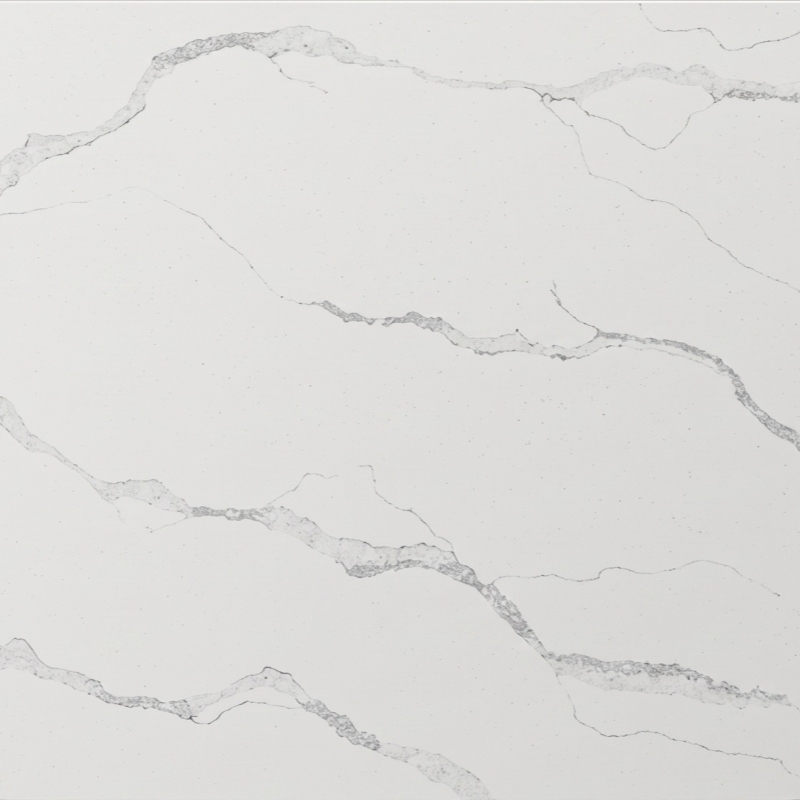
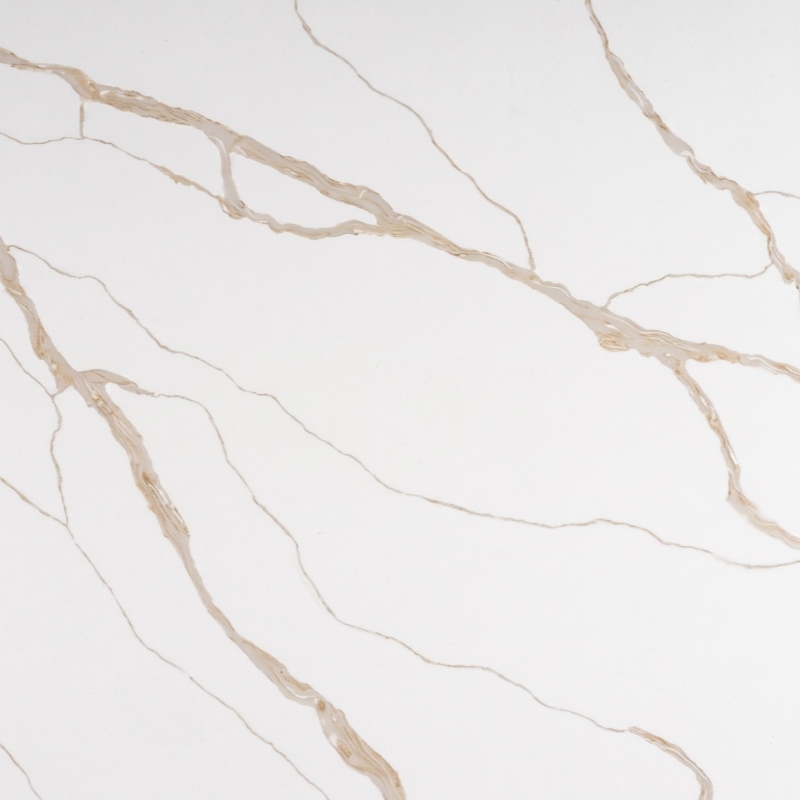
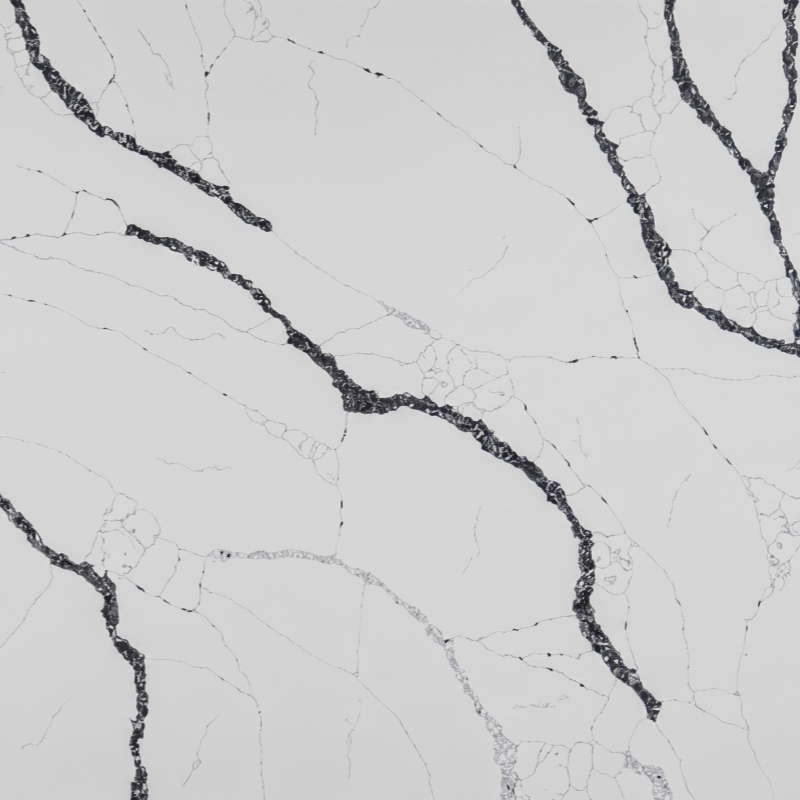
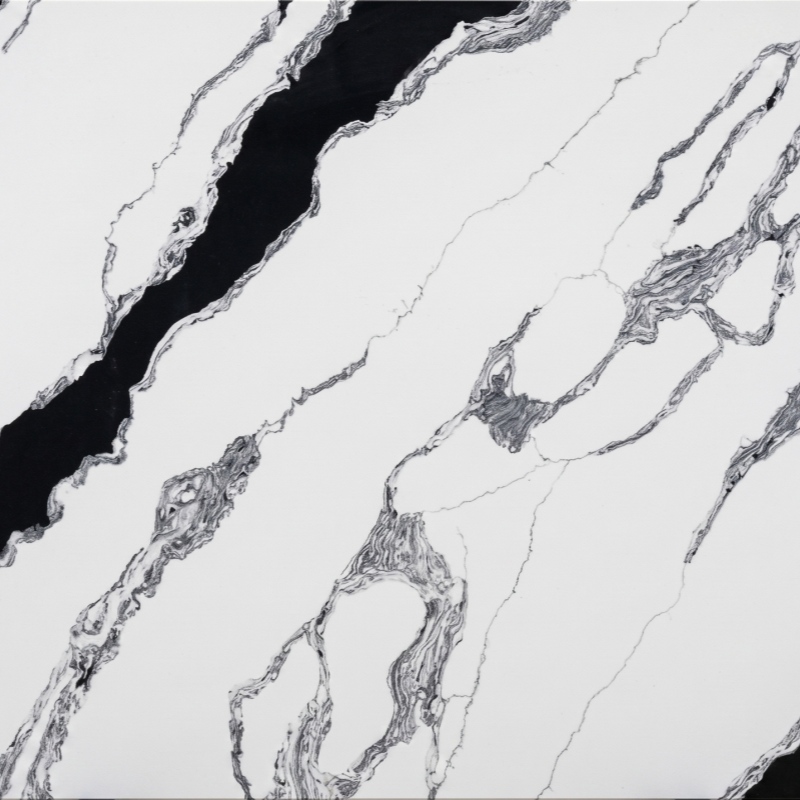
O mármore artificial ou mármore industrializado pode ser útil quando o projeto exige um efeito decorativo semelhante ao mármore, com maior repetibilidade, lotes mais estáveis e controle de quantidade mais fácil. Pode funcionar bem em painéis de parede internos, pisos, bancadas, espaços comerciais e projetos onde a tonalidade uniforme é importante. Mas não deve ser apresentado como mármore natural. Sua vantagem reside na produção controlada, não na singularidade geológica.
A pedra de quartzo costuma ser mais adequada para bancadas, tampos de lavatório, superfícies de trabalho e espaços onde o desempenho e a manutenção são importantes. Alguns designs de quartzo podem imitar os veios do mármore, mas o quartzo geralmente transmite uma mensagem diferente. Pode ser mais limpo e controlado, mas talvez não apresente a mesma profundidade natural do mármore.
O terrazzo é uma excelente opção quando o projeto exige ritmo, caráter agregado, repetibilidade e uma linguagem de superfície bem definida. Não é um substituto direto para o mármore, mas sim uma alteração no sistema visual. Quando usado corretamente, pode representar um aprimoramento. Já quando usado de forma inadequada, pode sobrecarregar um espaço refinado.
A pedra calcária traz aconchego, suavidade e uma serenidade arquitetônica. É frequentemente escolhida para galerias, hotéis boutique, espaços culturais, pátios e interiores comerciais acolhedores. No entanto, a pedra calcária deve ser avaliada cuidadosamente quanto à porosidade, acabamento, área de aplicação e requisitos de manutenção. Uma cor semelhante à da pedra calcária em outro material pode não proporcionar a mesma sensação de conforto e bem-estar.
A pedra sinterizada permite a criação de superfícies modernas, finas e de grande formato, além de ser adequada para certas aplicações técnicas. Pode ser uma boa opção quando o desempenho, o tamanho ou o controle de manutenção são importantes. No entanto, apresenta uma sensação tátil nas bordas, características acústicas e profundidade visual diferentes em comparação com a pedra natural.
O material ideal para substituir o original não é aquele que parece mais semelhante em uma pequena amostra. É o material que desempenha a mesma função no projeto final.
Avalie a cor em condições reais de projeto.
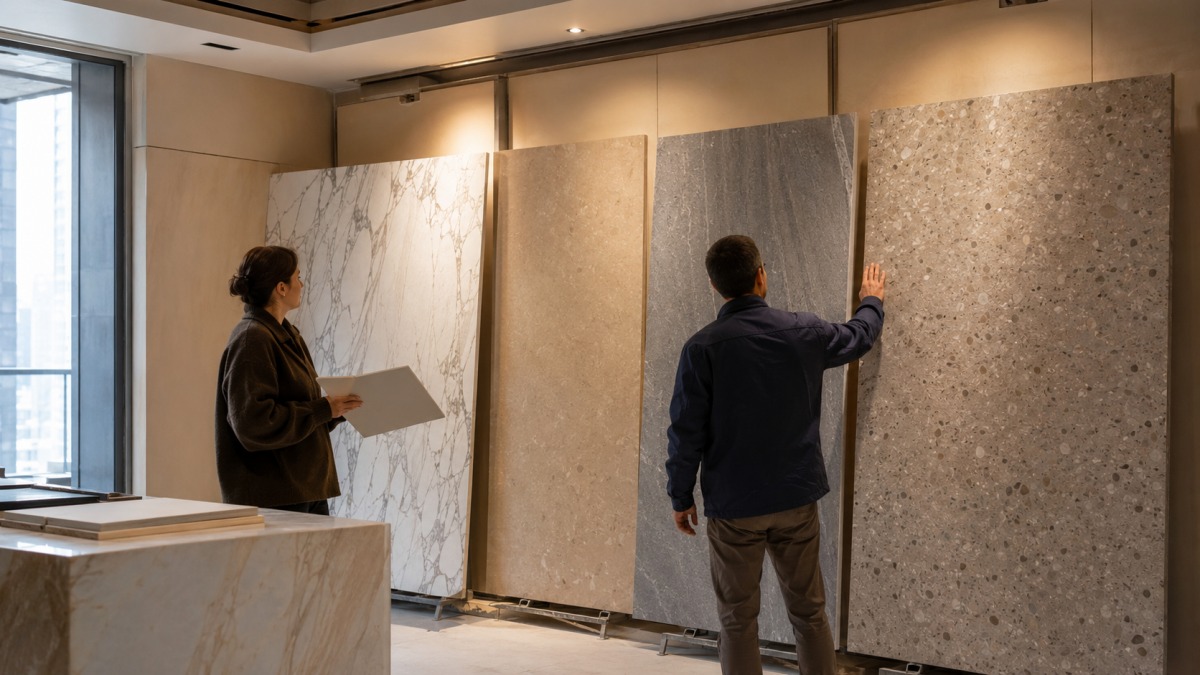
A aprovação de cores é um dos pontos em que é mais fácil tomar uma decisão errada.
Uma pequena amostra vista sobre uma mesa pode parecer muito semelhante ao material original. No entanto, a pedra instalada será afetada pela luz natural, iluminação artificial, cor da parede, móveis, detalhes metálicos, vidro, altura do teto e distância de visualização. Um material bege pode amarelar sob luz quente. Uma pedra cinza pode parecer fria em um interior voltado para o norte. Um veio marcante pode parecer elegante em uma amostra, mas agressivo demais em uma parede inteira.
Para intenção do projeto em pedra A cor deve ser analisada em três níveis:
Amostra pequena: útil para avaliar tom, acabamento e textura básicos.
Foto de amostra grande ou placa: útil para visualizar movimento, variação e escala do padrão.
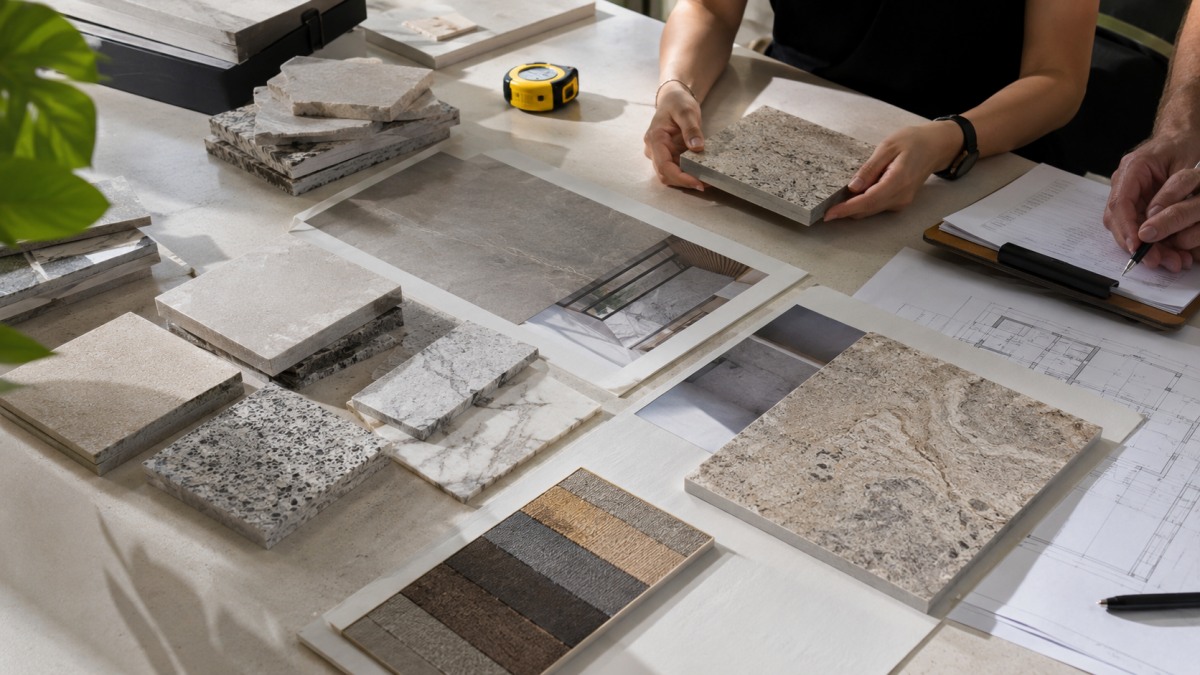
Maquete ou montagem a seco: útil para avaliar o efeito da instalação real, o ritmo das juntas e o impacto espacial.
Um comprador não deve aprovar um material substituto apenas com base em uma foto de close-up impecável. Imagens de close-up podem mascarar a escala. Imagens com retoques excessivos podem ocultar a realidade da superfície. A iluminação de estúdio pode fazer com que um material pareça mais limpo, mais aconchegante ou mais luxuoso do que será no local da obra.
A pergunta mais segura é simples: este material ainda terá a mesma sensação ao ser instalado no tamanho real, sob a luz real e com a disposição real das juntas?
Revisão de padrões, escala e ritmo visual
A escala do padrão costuma ser mais importante do que a cor.
Uma alternativa ao mármore pode ter a mesma base branca e veios cinzentos, mas se os veios forem muito densos, muito marcados, muito repetitivos ou muito grandes para o tamanho do painel, o espaço final ficará comprometido. Um substituto para o terrazzo pode ter uma cor de base semelhante, mas o tamanho diferente das partículas pode mudar completamente a atmosfera. Um substituto para o calcário pode combinar com o tom bege, mas se a textura for muito plana, o caráter natural e tranquilo desaparece.
Isso é especialmente importante para:
Grandes paredes do saguão
Paredes do banheiro do hotel
Pisos para lojas
Pisos de restaurante
Escadas
Balcões de recepção
Entorno do elevador
Piso do corredor do apartamento
Paredes decorativas
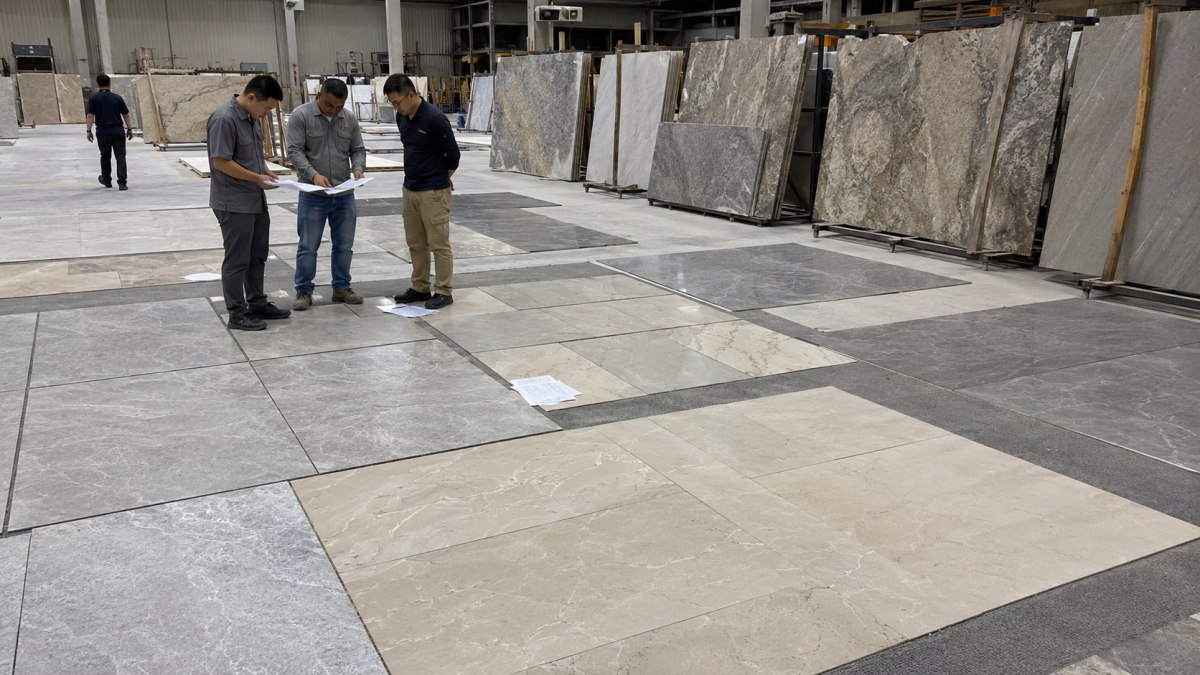
Nessas áreas, o olhar não se detém em uma única peça. Ele percebe o ritmo, a repetição, a direção e a interrupção. A má substituição muitas vezes só se torna visível depois que várias peças são instaladas juntas.
Para espaços amplos, o comprador deve solicitar fotos da laje inteira, desenhos de assentamento dos azulejos ou imagens de assentamento a seco antes da aprovação final. Se o projeto utilizar técnicas como correspondência de veios, linhas de borda, linhas onduladas ou corte direcional, o material alternativo deve ser verificado em relação à lógica do layout, e não apenas em relação à cor original.
Confirme os limites de fabricação antes da aprovação.
Um material pode parecer adequado, mas falhar durante o planejamento da fabricação.
Antes de aprovar um substituto, confirme se ele atende às dimensões, espessura, perfil de borda, corte de furos, ranhuras, peças curvas, detalhes de escadas, método de fixação na parede, fabricação de bancadas ou acabamento de superfície necessários. Alguns materiais são mais adequados para placas. Outros, para ladrilhos. Alguns funcionam bem para painéis retos, mas não para componentes com formatos especiais. Alguns ficam bonitos quando polidos, mas perdem o charme quando acetinados.
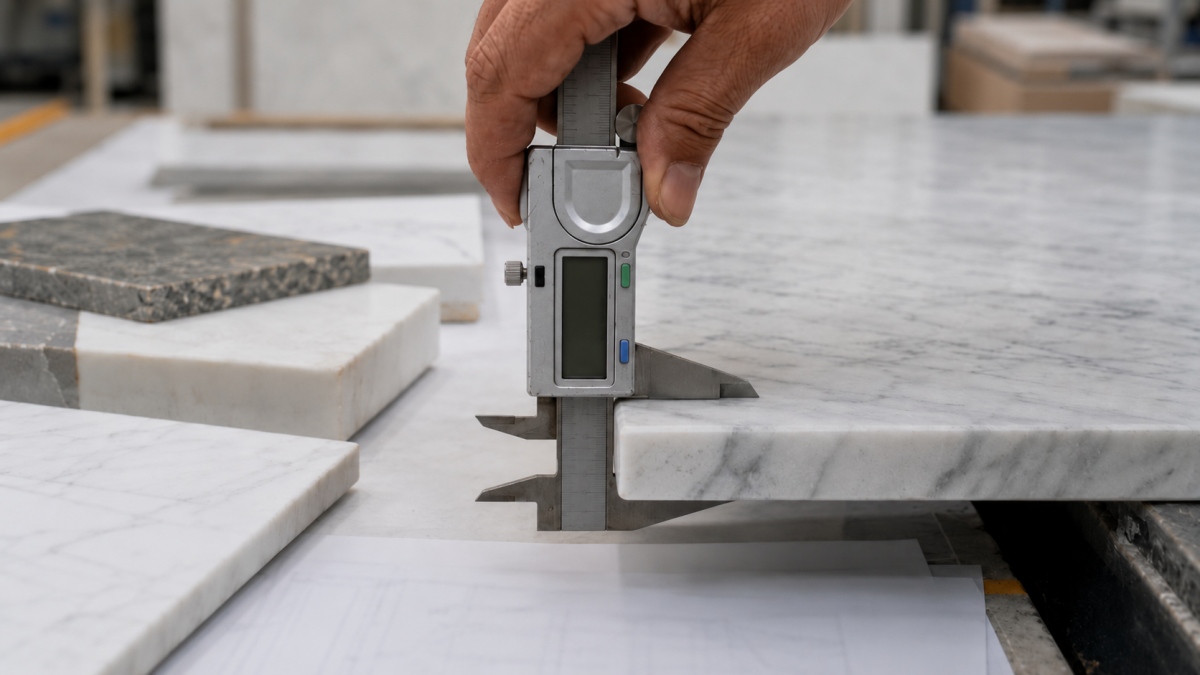
É aqui que engenharia de valor em pedraDeve-se ter cuidado ao escolher um material. Se um material mais barato gerar mais desperdício de corte, maior risco de quebra, instalação mais difícil, necessidade de vedação extra ou mais ajustes no local, o custo total do projeto pode não ser compensado.
Uma boa substituição deve reduzir o risco, e não transferi-lo da cotação para o local da obra.
Os compradores devem confirmar:
Tamanho disponível da placa ou ladrilho
Espessura recomendada
Acabamentos de superfície adequados
Opções de processamento de borda
Tolerância de corte sob medida
Consistência do lote
Método de embalagem
Ambiente de instalação esperado
Requisitos de manutenção
Dados técnicos ou relatórios de testes, quando necessário.
O material substituto deve ser avaliado como um projeto, e não apenas como uma amostra.
Crie um caminho de aprovação claro
A substituição de materiais deve deixar um registro. Isso protege o comprador, o projetista, o fornecedor, o empreiteiro e o cliente final.
Um caminho prático para a aprovação pode incluir:
Material original especificado e motivo da substituição
O principal objetivo do projeto é preservar
Opções de materiais alternativos com comparação clara.
Revisão de amostra ou de amostra grande
Fotos das placas ou confirmação da gama de produção
Confirmação de conclusão
Análise de adequação da candidatura
Dados técnicos, se necessário.
Aprovação de maquete ou ensaio a seco para áreas importantes
Aprovação por escrito antes da produção.
Desenhos, listas de tamanhos, etiquetas e requisitos de embalagem atualizados.
Esse processo pode parecer lento, mas é mais rápido do que resolver disputas depois que o material chega.
Muitos problemas com pedras não são causados por materiais de má qualidade, mas sim por aprovações pouco claras.
Erros comuns na escolha de pedras alternativas
Erro 1: Escolher apenas pelo preço
Um preço mais baixo pode ser útil, mas não pode ser o único critério. Um material mais barato que altera o estilo do projeto, aumenta o risco de instalação ou gera reclamações de manutenção não é uma boa estratégia de custo-benefício.
Erro 2: Aprovar com base em uma pequena amostra
Uma pequena amostra não mostra o movimento completo, a gama de lotes, a distribuição dos chips, o efeito do painel grande ou o ritmo instalado.
Erro 3: Ignorar a finalização
O mesmo material pode apresentar sensações completamente diferentes quando polido, brunido, com acabamento em couro, escovado ou jateado. O acabamento afeta a profundidade da cor, o reflexo, o deslizamento, o toque e a manutenção.
Erro 4: Substituir a profundidade natural pela similaridade da superfície
Algumas alternativas podem combinar com a foto, mas não com a sensação tátil. Isso é importante em espaços de hotelaria de alto padrão, residências de luxo e lojas de marcas renomadas.
Erro 5: Esquecer o instalador
Um material substituto pode exigir manuseio, corte, vedação, adesivo, suporte, largura da junta ou armazenamento no local diferentes. Se o instalador não for informado, o risco da substituição passa para o local da obra.
Erro 6: Tratar todas as áreas da mesma forma
Um material adequado para uma parede pode não ser adequado para um piso. Um material adequado para uma bancada de banheiro pode não ser adequado para uma escada. Um material adequado para um hall de entrada seco pode não ser adequado para um banheiro úmido.
Lista de verificação para substituição de materiais para compradores
Antes de aprovar uma pedra alternativa, os compradores do projeto podem usar esta lista de verificação:
Qual era o objetivo visual original do material?
Quais partes da intenção do projeto não devem ser alteradas?
A alternativa escolhida leva em consideração o custo, o prazo de entrega, o desempenho, a consistência ou a manutenção?
O projetista analisou a substituição em condições reais de iluminação?
Estão disponíveis amostras de grandes dimensões, fotos de placas ou imagens da gama de lotes?
O material atende às dimensões, espessura, acabamento e detalhes de fabricação exigidos?
A escala de padrões continuará funcionando após a instalação?
A alternativa altera a expectativa de manutenção?
O empreiteiro ou instalador confirmou a adequação da instalação?
A aprovação é registrada por escrito antes da produção?
Os desenhos, listas de tamanhos, etiquetas, embalagens e documentos de entrega foram atualizados?
Se a resposta a várias dessas perguntas não for clara, a substituição não está pronta para produção.
Quando um substituto é uma boa decisão
Um bom substituto não precisa ser invisível. Às vezes, um projeto melhora porque o novo material é mais estável, mais fácil de manter, mais adequado à aplicação ou mais realista em relação ao cronograma.
O mármore natural pode ser substituído por mármore artificial quando o projeto exige maior uniformidade em diferentes ambientes. Um quartzo com aparência de mármore pode ser mais adequado para bancadas de uso intenso. Um piso de terrazzo pode criar um ritmo de design mais marcante do que um piso de pedra lisa. Um calcário em tons quentes pode contribuir para uma atmosfera europeia mais suave do que um material branco e frio. Uma pedra sinterizada pode solucionar problemas de tamanho ou desempenho em aplicações de superfícies modernas.
O importante é tomar a decisão com honestidade.
Não finja que o substituto é o mesmo material. Explique o que muda, o que melhora, o que é limitado e o que precisa ser verificado antes da aprovação.
É assim que a substituição se torna uma decisão profissional de projeto, em vez de um compromisso que ninguém quer assumir.
Proteja a intenção e, em seguida, escolha o material.
Os projetos em pedra não são construídos a partir de nomes de materiais. São construídos a partir de decisões: tonalidade, escala, acabamento, disposição, detalhes das bordas, desempenho, manutenção, cronograma e responsabilidade pela aprovação.
O melhor material alternativo nem sempre é a cópia visual mais próxima. É aquele que protege a intenção original do projeto, ao mesmo tempo que o torna mais viável, controlável e realista.
Se sua equipe estiver comparando materiais de pedra alternativos para um projeto de hotel, varejo, residencial, comercial ou de vila, a Aoli Stone pode ajudar a revisar a referência original do material, a área de aplicação, a intenção do projeto, a direção das amostras, os detalhes de fabricação e os requisitos de fornecimento para exportação antes que as decisões de produção sejam tomadas. Você pode solicitar material de projeto Analise ou partilhe os seus desenhos, imagens de referência e detalhes de quantidade através da nossa página de Contacto.
Perguntas frequentes
Materiais alternativos à pedra podem substituir o mármore natural em um projeto?
Sim, mas somente quando a equipe do projeto entender o objetivo principal do mármore. Se a intenção for obter profundidade natural, veios raros ou um visual luxuoso, a substituição pode ser difícil. Se a intenção for uma base branca, veios suaves, custo controlado ou aplicação repetível em quartos de hotel, mármore artificial, quartzo ou outras opções de pedra industrializada podem ser consideradas.
Substituição de materiais é o mesmo que engenharia de valor?
Não. A engenharia de valor deve aprimorar o equilíbrio entre custo, desempenho, cronograma e intenção do projeto. Se a alternativa apenas reduz o preço, mas danifica o espaço, aumenta o risco de instalação ou cria problemas de manutenção, não se trata de verdadeira engenharia de valor.
O que os compradores devem perguntar antes de aprovar uma pedra substituta?
Os compradores devem solicitar o motivo da substituição, a intenção original do projeto, amostras grandes ou fotos das placas, confirmação do acabamento, adequação da aplicação, limites de fabricação, dados técnicos quando necessário e aprovação por escrito antes da produção.
Uma pequena amostra pode confirmar se a pedra é outra?
Uma pequena amostra é útil, mas não é suficiente para áreas importantes do projeto. Placas grandes, maquetes, fotos de assentamento a seco ou desenhos de layout são frequentemente necessários para avaliar a gama de cores, a escala do padrão, o acabamento da superfície e o ritmo da instalação.
Quais áreas precisam de uma análise de substituição mais cuidadosa?
Paredes decorativas, saguões de hotéis, escadas, balcões de recepção, pisos de lojas, paredes de banheiros, bancadas, áreas ao redor de elevadores e grandes áreas contínuas de piso exigem uma análise cuidadosa, pois o material fica altamente visível após a instalação.
O instalador deve estar envolvido na substituição de materiais?
Sim. O instalador deve compreender a espessura, o tamanho, o acabamento, os detalhes das bordas, os requisitos de manuseio, o adesivo ou método de fixação, o plano de juntas e as necessidades de armazenamento no local do novo material. Um material que pareça aceitável na aprovação ainda pode causar problemas se os requisitos de instalação forem ignorados.



 IPv6 SUPORTADO POR REDE