Português
 English
 Español
 عربي
عربي 한국어
한국어

As bancadas de quartzo são frequentemente escolhidas por sua aparência uniforme, toque moderno e maior facilidade de manuseio em comparação com muitas superfícies de pedra natural. No entanto, em projetos reais, a parte mais vulnerável de uma bancada de quartzo nem sempre é a superfície em si. Muitas vezes, é a abertura: o recorte para a pia, o recorte para o fogão, o furo para a torneira, o ralo ou qualquer área onde a placa é interrompida antes da instalação. Para compradores, empreiteiros, marceneiros e distribuidores, os recortes para bancadas de quartzo merecem mais atenção antes da fabricação, pois afetam a resistência, o suporte, a segurança no transporte, a responsabilidade pela instalação e o desempenho a longo prazo.
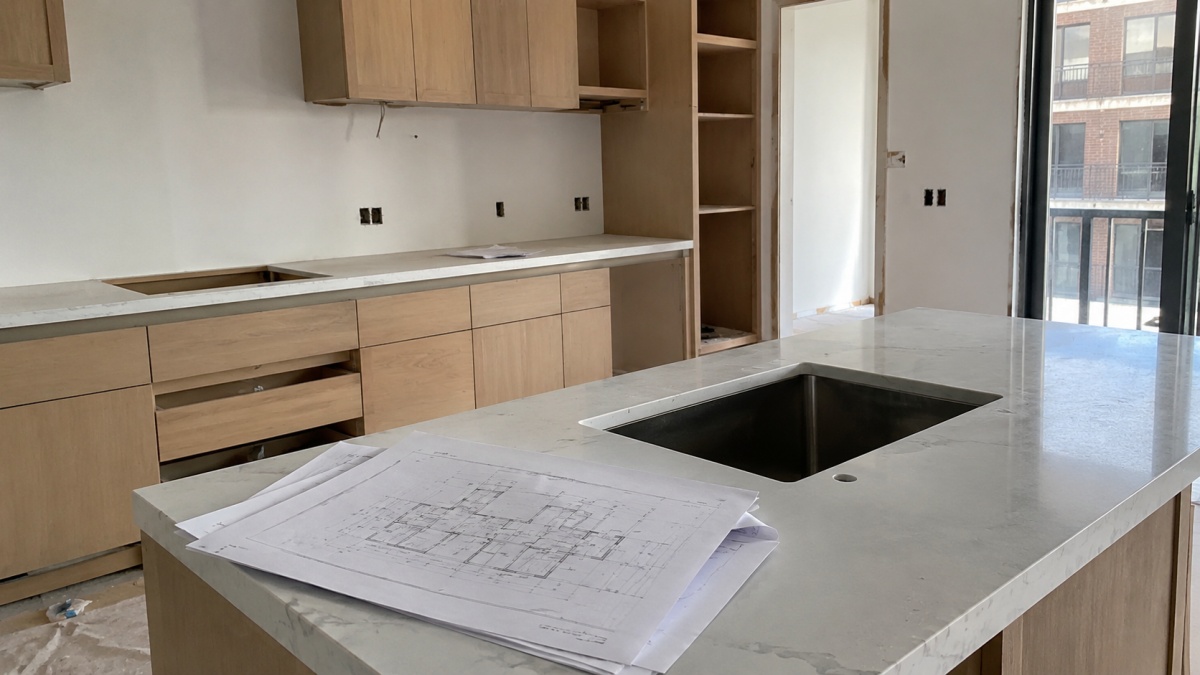
O problema geralmente começa silenciosamente. Um comprador envia as dimensões da bancada. A fábrica confirma o desenho. O marceneiro prepara a base. O instalador espera que a pia ou o fogão se encaixem. Todos presumem que o recorte é "apenas um buraco". Mas um recorte altera a forma como a tensão se propaga pela bancada. Também reduz a resistência em faixas estreitas, cantos, bordas e áreas onde ficam os eletrodomésticos. Quando algo dá errado mais tarde, a questão raramente é simples: foi um problema de fabricação, um problema no desenho, um problema no suporte do armário, um problema no transporte ou um problema na instalação?
O quartzo é mais previsível do que muitas pedras naturais, mas previsível não significa isento de riscos. Um painel de bancada inteiro possui suporte contínuo de material em toda a sua extensão e largura. Uma vez que uma abertura é feita, a pedra restante ao redor dessa abertura precisa suportar mais tensão.
Isso é especialmente importante em torno de:
aberturas de pia
Aberturas para fogão ou placa de indução
Orifícios para torneira
áreas de pia de embutir
Trilhos dianteiros longos e estreitos
Corrimãos traseiros atrás das pias
Recortes próximos às costuras
Recortes próximos às bordas ou cantos
Grandes aberturas em seções finas de bancada
Quanto menor for a faixa de pedra restante, mais cuidado ela deverá ter ao ser manuseada, acondicionada, apoiada e instalada.
Uma bancada de quartzo geralmente não falha porque o quartzo é frágil. Ela falha quando o projeto, o desenho, o suporte, o manuseio e a instalação não respeitam os pontos fracos criados pela abertura.
Para compradores que trabalham com apartamentos, hotéis, cozinhas comerciais, bancadas de banheiro ou programas de fornecimento para empreiteiros, o início coordenação do projeto de quartzoé mais valioso do que a correção tardia do sítio.
A abertura de uma pia pode parecer simples em um desenho, mas é um dos locais mais comuns onde a responsabilidade se torna confusa.
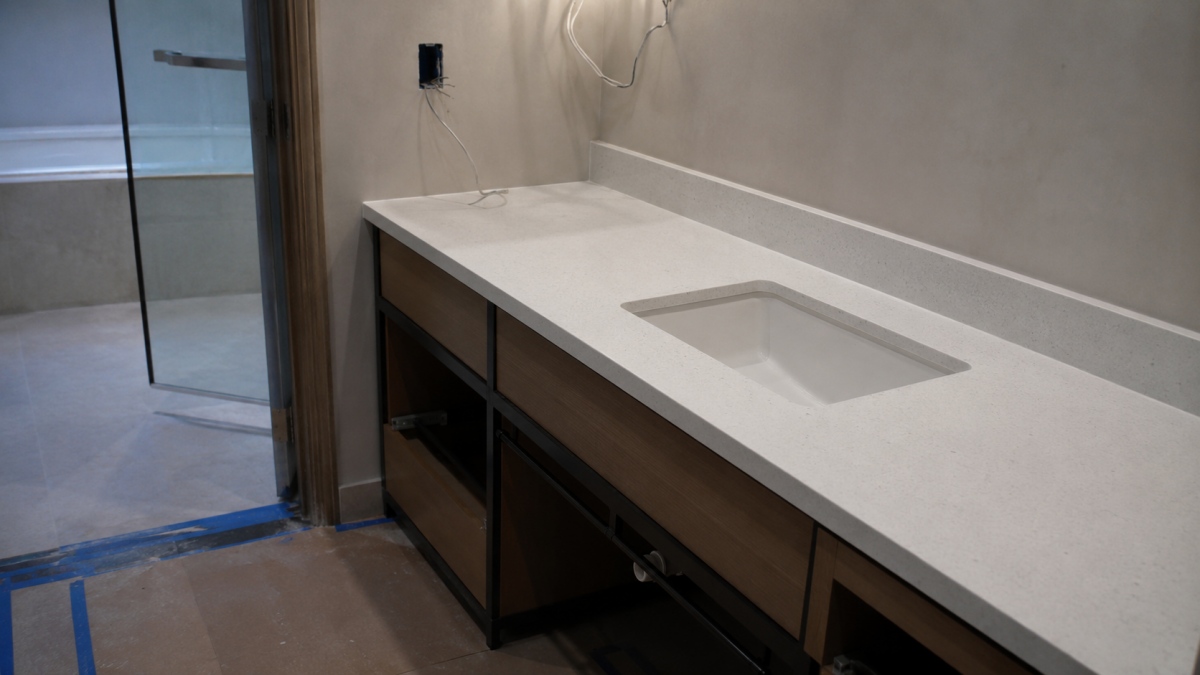
O recorte da pia afeta vários detalhes simultaneamente:
O tamanho da abertura
Tipo de instalação da pia
A largura restante dos trilhos dianteiro e traseiro
A distância da abertura até a borda da bancada
A estrutura do gabinete abaixo
O peso da bacia quando cheia de água
O método de fixação
O sistema de suporte sob a pedra
Uma pia de embutir é um bom exemplo. Vista de cima, pode parecer limpa e minimalista. Do ponto de vista do projeto, porém, exige um suporte robusto. A pia não deve depender apenas da superfície de quartzo para suportar todo o seu peso. A estrutura do gabinete, os suportes, os trilhos e outros métodos de sustentação devem ser planejados antes da instalação.
Uma bela abertura para pia sem o suporte adequado não é uma solução definitiva. É um risco indefinido.
Por isso, o suporte para a abertura da pia deve ser discutido antes da fabricação, e não depois que a bancada chegar ao local.
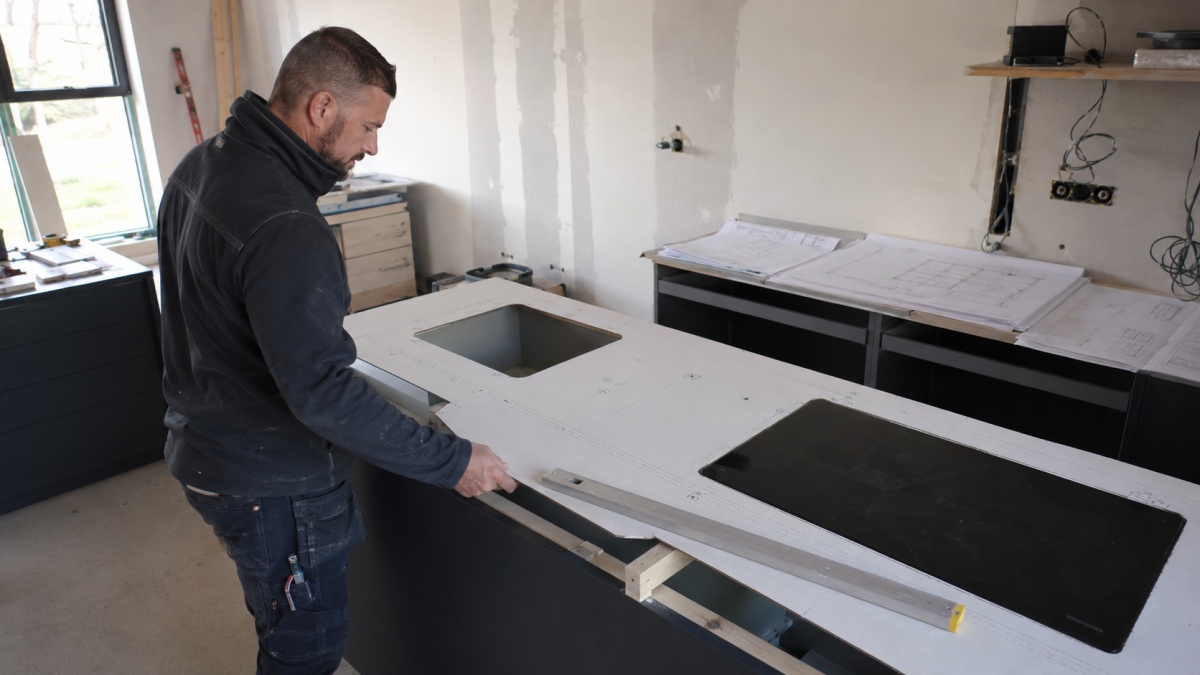
O risco de um disjuntor defeituoso no fogão é diferente do risco de um disjuntor defeituoso na pia.
A abertura para uma pia levanta principalmente questões de suporte, exposição à água, fixação e peso. Já a abertura para um fogão ou cooktop também traz à tona questões como calor, espaço livre para o eletrodoméstico, espaço para expansão, ventilação e integração com os armários.
Os compradores do projeto devem confirmar:
Modelo ou modelo exato do eletrodoméstico
Dimensões do recorte exigidas pelo fornecedor do eletrodoméstico
Espaço livre mínimo ao redor do fogão
Distância da borda frontal até a parede posterior
Requisitos de ventilação do gabinete
Requisitos de proteção térmica
Apoio em torno da inauguração
Se a placa de fogão fica nivelada, elevada ou rebaixada.
Se o recorte estiver próximo a uma costura ou a uma faixa estreita.
O fornecedor de pedras não pode deduzir com segurança os detalhes dos eletrodomésticos a partir de um desenho genérico da bancada. O fornecedor de eletrodomésticos, o marceneiro, o instalador e o fabricante devem trabalhar com as mesmas informações.
O recorte para fogão é onde a fabricação em pedra encontra a engenharia de eletrodomésticos. Tratá-lo como uma abertura retangular comum é como começam os problemas evitáveis na obra.
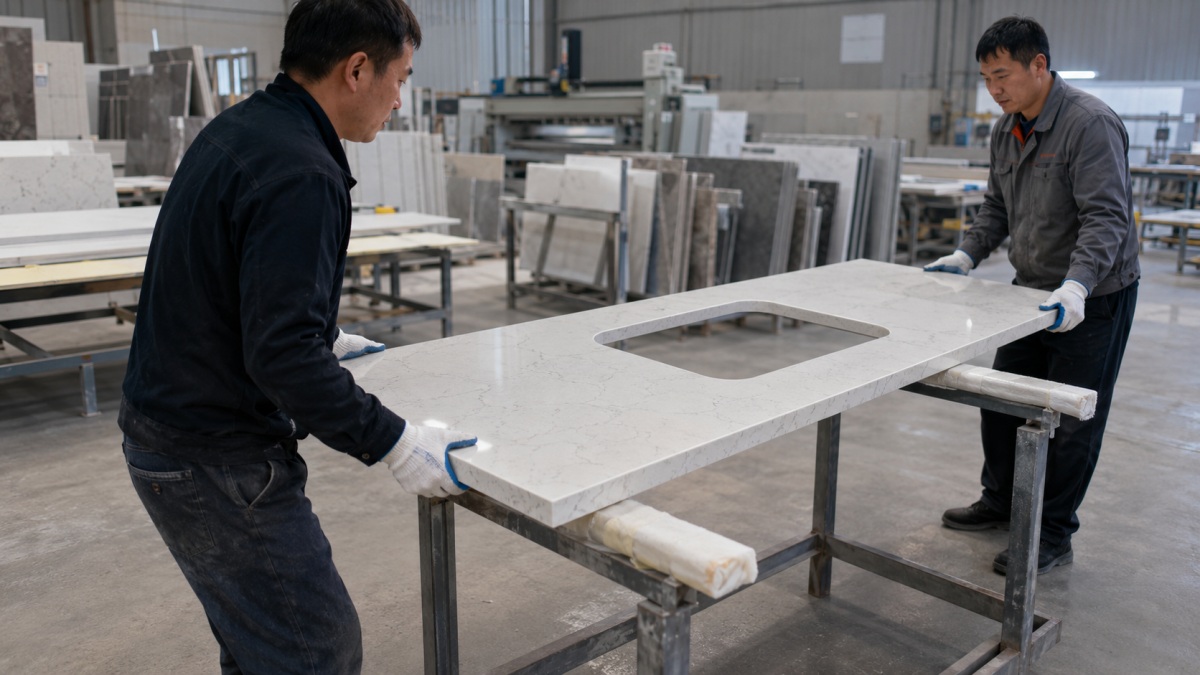
Um dos detalhes técnicos mais importantes no recorte de uma bancada é o canto interno.
Cantos internos agudos criam concentração de tensão. Em termos simples, a tensão tende a se acumular em torno de cantos internos apertados, especialmente durante o manuseio, transporte, instalação, movimentação térmica ou pressão de carga. Um raio de canto adequado ajuda a reduzir esse risco.
Isso é importante porque:
Recortes para pia
Recortes de fogão
cantos internos quadrados
Sulcos de drenagem perto de aberturas
Aberturas próximas às bordas
Peças compridas para bancada com vários recortes.
Do ponto de vista do comprador, a pergunta fundamental não é apenas "Vocês conseguem cortar neste formato?". A pergunta mais importante é:
“Este formato recortado é seguro para fabricação, transporte e instalação?”
Se o projeto exigir cantos vivos, o desenho ainda deve ser revisado cuidadosamente para evitar a criação de um ponto fraco oculto. O design visível e a lógica de fabricação não devem entrar em conflito.
Pequenos furos são fáceis de subestimar.
Um furo para torneira, dispenser de sabão, torneira de água filtrada ou acessório pode parecer inofensivo em comparação com uma abertura grande na pia. No entanto, furos muito próximos uns dos outros, muito próximos do recorte da pia ou muito próximos da borda traseira podem enfraquecer a área de quartzo restante.
Os compradores do projeto devem confirmar:
Diâmetro do furo
Posição central
Distância entre os furos
Distância do furo até a abertura da pia
Distância do furo até a borda traseira
Se os furos entrarem em conflito com os detalhes do armário ou da parede.
Verificar se a base da torneira cobre o orifício corretamente.
Se o instalador fará a perfuração no local ou se a fábrica fará os cortes prévios.
A perfuração em fábrica pode melhorar a precisão quando os desenhos são confiáveis. A perfuração no local pode oferecer flexibilidade quando as condições do terreno são incertas. Nenhuma das opções é automaticamente melhor. A escolha certa depende do controle do projeto.
Por isso, um desenho de fabricação de quartzo deve incluir claramente a posição dos furos, e não apenas o comprimento e a largura da bancada.
O desenho de uma bancada não deve ser tratado como mera decoração. Trata-se de um acordo técnico entre o comprador, o fornecedor, o fabricante, o instalador, o marceneiro e, por vezes, o fornecedor dos eletrodomésticos.
Um desenho útil para fabricação em quartzo deve mostrar:
Dimensões da bancada finalizada
Grossura
Acabamento da superfície, se aplicável.
Perfil de borda
Bordas visíveis
Tamanho do recorte da pia
Tipo de pia
tamanho do recorte para fogão ou placa de indução
Posição do furo da torneira
Detalhes do backsplash ou do revestimento lateral
Posição da costura
Saliência
Zonas de apoio do gabinete
Estado da parede, caso já seja conhecido.
Numeração de peças
Sequência de arrumação quando se trata de vários quartos.
Um desenho que mostra apenas as dimensões externas da bancada não controla o projeto. Ele controla apenas o retângulo.
Para compradores que comparam múltiplos materiais de projeto Ao escolher opções para bancadas, a fase de desenho também é onde as diferenças entre os orçamentos ficam mais claras. Um fornecedor pode incluir recortes, polimento de bordas, proteção da embalagem e verificações pré-embarque. Outro pode cotar apenas a fabricação básica. O preço unitário pode parecer semelhante, mas o escopo real não é o mesmo.
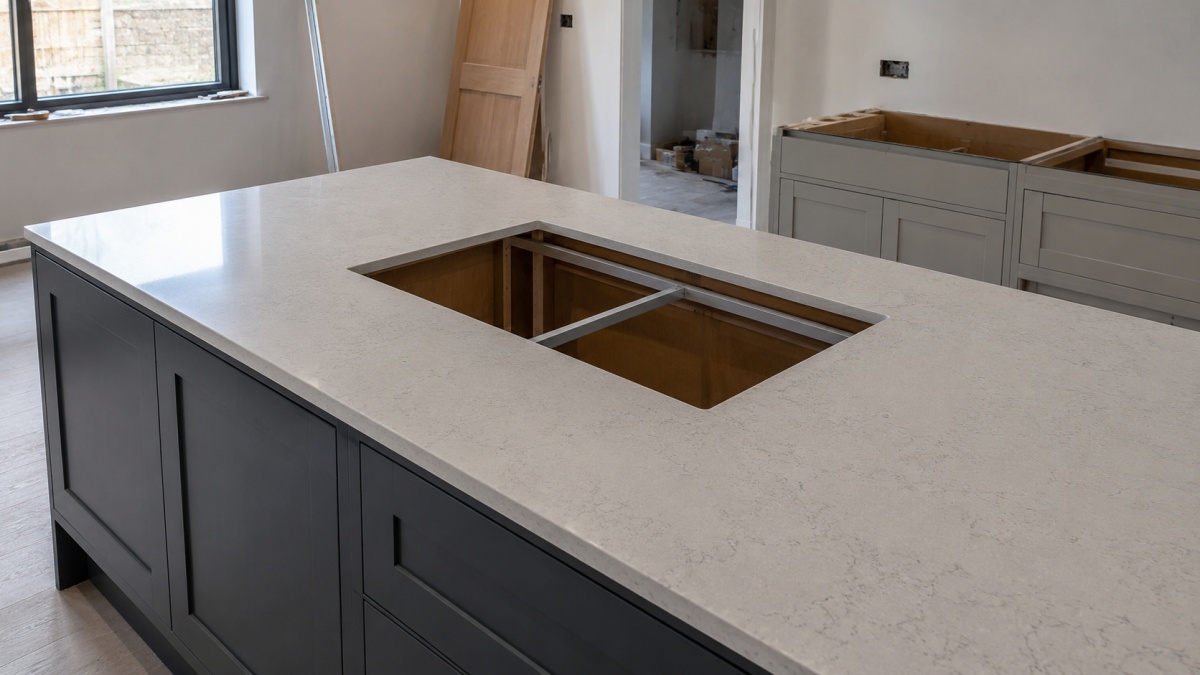
Uma placa inteira de quartzo ou um tampo retangular simples são mais fáceis de manusear do que uma bancada com aberturas. Depois que a área da pia ou do fogão é cortada, as estreitas guias restantes ao redor da abertura ficam mais vulneráveis durante o içamento, embalagem, carregamento e descarregamento de contêineres e movimentação no local.
Por isso, a proteção das bordas das bancadas deve ser planejada considerando as partes mais vulneráveis, e não apenas as bordas externas.
A proteção deve considerar:
Trilho frontal próximo à abertura da pia
Trilho traseiro atrás do recorte do fogão
Tiras finas ao redor dos orifícios da torneira
Cantos dos recortes
Bordas visíveis chanfradas ou polidas
peças longas e estreitas
Bancadas empilhadas verticalmente
Peças com múltiplos recortes
Exportar movimento e vibração
O objetivo da embalagem não é apenas fazer com que os produtos pareçam organizados. É também manter intactos os detalhes mais frágeis até a instalação.
Para projetos de exportação, esse ponto é ainda mais importante. Uma bancada pode passar pela inspeção de fábrica, mas ser reprovada posteriormente se for içada pelo ponto errado, embalada sem a devida separação ou manuseada como se fosse uma placa retangular sólida.
Recortes para bancada de quartzo frequentemente se encontram na intersecção de várias responsabilidades.
O fornecedor de pedra pode fabricar a bancada.
O marceneiro pode fornecer a base.
O fornecedor do eletrodoméstico pode fornecer o gabarito da placa de fogão.
O fornecedor da pia pode definir o método de instalação.
O instalador poderá ajustar detalhes no local.
O comprador pode ser responsável pela aprovação final.
Se as responsabilidades não estiverem claramente definidas, o ponto de exclusão se torna um alvo para acusações.
Antes da produção, a equipe do projeto deve esclarecer:
Quem fornece o modelo final da pia?
Quem confirma o modelo do fogão?
Quem verifica o apoio do gabinete?
Quem confirma a posição do recorte?
Quem é o responsável pela medição do local?
Quem aprova os desenhos de fabricação?
Quem se encarrega dos ajustes no local?
Quem verifica se a pia possui suporte independente?
Quem confirma se os recortes podem ser feitos na fábrica ou no local da obra?
Uma boa coordenação de projetos não elimina todos os riscos. Ela elimina os mal-entendidos mais fáceis de acontecer.
Para compradores que desejam compreender de forma mais abrangente planejamento de projeto em pedraOs recortes nas bancadas são um exemplo útil de como um pequeno detalhe pode afetar toda a cadeia de entrega.
O primeiro erro é aprovar o tamanho da bancada sem confirmar os detalhes da pia e do fogão. Uma bancada não está pronta para ser fabricada se faltarem as informações sobre os eletrodomésticos.
O segundo erro é presumir que todas as pias precisam da mesma lógica de abertura. Pias de sobrepor, de embutir, niveladas e integradas exigem planejamentos diferentes.
O terceiro erro é colocar os recortes muito perto de bordas, juntas ou outras aberturas sem verificar se a área restante de quartzo está segura.
O quarto erro é ignorar o suporte do gabinete. Um recorte pode ser preciso e ainda assim apresentar um desempenho ruim se a base abaixo for frágil ou incompleta.
O quinto erro é escolher o orçamento de fabricação mais barato sem verificar se o acabamento das bordas, o polimento dos recortes, a proteção da embalagem e a inspeção fotográfica estão incluídos.
O sexto erro é deixar para a última hora a localização dos furos para torneiras ou acessórios. Furos pequenos podem causar grandes problemas quando entram em conflito com paredes, pias, armários ou conexões.
O sétimo erro é tratar a embalagem como um problema exclusivo do armazém. No caso de bancadas pré-fabricadas, a embalagem faz parte do sistema de controle de riscos.
Antes do início da fabricação, os compradores devem confirmar o seguinte:
Medição final do local
Desenho da bancada aprovado
Cor e espessura do quartzo
Perfil de borda acabado
Modelo da pia e tipo de instalação
Tamanho do recorte da pia
Método de suporte da pia
modelo de fogão ou placa de indução
Dimensões e folga do recorte do fogão
Posicionamento dos furos da torneira
Distância dos furos às aberturas e bordas
Posição da costura
Suporte de saliência e armário
Requisito de raio de canto
Requisito de polimento de recorte
Qual a preferência: recorte de fábrica ou recorte no local?
Proteção da embalagem para áreas recortadas
Fotos antes do envio
Responsabilidade pelo ajuste da instalação
Esta lista de verificação não é apenas um documento para preencher espaço. É uma forma de manter a fabricação, a embalagem e a instalação alinhadas antes do corte do quartzo.
Os recortes de fábrica geralmente são adequados quando os desenhos, modelos, medidas do local e informações do aparelho são confiáveis. Eles podem melhorar a consistência, reduzir a poeira no local e fornecer ao comprador um registro de inspeção pré-embarque mais claro.
No entanto, os recortes de fábrica podem não ser ideais quando:
As dimensões do local são incertas.
Os cargos no gabinete podem mudar.
Os modelos de eletrodomésticos ainda não estão finalizados.
As condições das paredes são irregulares.
O instalador deseja fazer os ajustes finais no local.
O risco de transporte é elevado para um trecho estreito e frágil.
Não existe uma regra única que se aplique a todos os projetos. A melhor decisão baseia-se na certeza do local, na qualidade dos desenhos, na confirmação dos equipamentos e no risco de manuseio.
Um fornecedor responsável não deve simplesmente enviar todos os recortes para a fábrica ou todos os recortes para o instalador. A escolha certa depende do projeto.
Antes de confirmar um pedido de bancada de quartzo, os compradores podem fazer perguntas diretamente:
Os desenhos mostram todos os recortes e furos?
Os modelos de pia e fogão estão confirmados?
O restante do trilho frontal é largo o suficiente?
Os cantos internos foram projetados para serem seguros?
O suporte da pia é de responsabilidade do instalador do armário ou do instalador em si?
Os furos para torneira estão suficientemente afastados da abertura da pia e da borda traseira?
As bordas do recorte serão polidas ou apenas cortadas?
Como a bancada será protegida durante o processo de embalagem?
Você pode me enviar fotos antes do envio?
Quem é o responsável se as dimensões do local mudarem após a produção?
As respostas não precisam ser complicadas. Precisam ser claras.

Recortes em bancadas de quartzo interrompem a estrutura contínua da placa. Aberturas para pias, fogões, torneiras ou acessórios criam áreas estreitas onde tensões, danos por manuseio, problemas de suporte ou erros de instalação são mais propensos a ocorrer.
As bancadas de quartzo são geralmente resistentes, mas as aberturas para pias reduzem a quantidade de material ao redor do recorte. Essa área torna-se mais sensível ao suporte, manuseio, raio do canto e método de instalação, especialmente para pias de embutir ou aberturas grandes.
O suporte da abertura da pia refere-se ao gabinete, suporte, trilho ou outro sistema de apoio que sustenta a pia e ajuda a proteger o quartzo ao redor da abertura. A pia não deve depender apenas da superfície da bancada para suporte, especialmente quando estiver pesada ou cheia de água.
A instalação de um fogão ou placa de indução envolve considerações sobre calor, espaço livre para o aparelho, ventilação e espaço para expansão. O recorte deve seguir o gabarito do aparelho e deve ser coordenado com o marceneiro e o instalador antes da fabricação.
Ambas as opções são viáveis. A furação em fábrica é preferível quando os desenhos e as medidas no local são confirmados. A furação no local pode ser mais segura quando as condições da parede, a posição dos armários ou os detalhes de instalação são incertos. A decisão deve ser tomada antes da produção.
Um desenho de fabricação de quartzo deve incluir o tamanho final, a espessura, o perfil da borda, as bordas visíveis, as dimensões dos recortes para pia e fogão, a posição dos furos para torneira, a localização das juntas, a saliência, os detalhes do backsplash, as zonas de suporte e a numeração das peças, quando necessário.
Os compradores podem reduzir os riscos confirmando os modelos dos eletrodomésticos, o tipo de pia, as dimensões do recorte, o método de suporte, a posição dos furos, o raio dos cantos, a proteção da embalagem, as fotos pré-embarque e os limites de responsabilidade antes do início da fabricação.
As bancadas de quartzo são frequentemente vendidas como limpas, modernas e confiáveis. Isso é verdade quando os detalhes do projeto são controlados. Mas é nos recortes que a simples bancada se transforma em um objeto técnico.
O melhor momento para resolver um problema de recorte é antes do corte do quartzo.
Para compradores de projetos, empreiteiros e distribuidores, uma conversa clara sobre desenhos, aberturas, suportes, proteção e responsabilidade pela instalação pode evitar disputas dispendiosas mais tarde. Se o seu próximo projeto incluir bancadas de quartzo com pias, cooktops ou vários furos, revise os detalhes do recorte antes de aprovar a fabricação.
A Aoli Stone oferece suporte ao fornecimento de bancadas de quartzo e pedras para projetos comerciais, de hotelaria, residenciais e de construção civil. Se o seu pedido incluir desenhos personalizados, recortes para pias, nichos para cooktops ou requisitos de embalagem para exportação, você pode compartilhar os detalhes do projeto para uma análise técnica antes da produção.



 IPv6 SUPORTADO POR REDE