Português
 English
 Español
 عربي
عربي 한국어
한국어

Os problemas com pedras nem sempre começam na fábrica. Muitos problemas começam depois que os materiais chegam, quando as caixas são abertas muito rapidamente, os rótulos são ignorados, as equipes de obra estão com pressa ou a instalação começa antes que o comprador tenha confirmado o que foi entregue.
Em projetos internacionais com pedra, a inspeção de chegada não é uma mera etapa administrativa. Ela representa a ponte entre o fornecimento e a instalação.
Um projeto pode ter o material certo, desenhos corretos, embalagem adequada e amostras aprovadas. Mas se a equipe de recebimento não verificar a pedra antes da instalação, pequenos problemas podem se transformar em custos elevados na obra: lotes misturados, locais incorretos, bordas lascadas, peças faltantes, acabamentos incorretos, numeração ilegível ou materiais instalados no local errado.
Isso é especialmente importante para mármore natural, granito, quartzo, mármore artificial, terrazzo, pedra sinterizada, calcário e peças cortadas sob medida. Cada material tem sua própria lógica de inspeção. Tratar todos os materiais de pedra da mesma forma é uma das maneiras mais fáceis de criar riscos evitáveis.
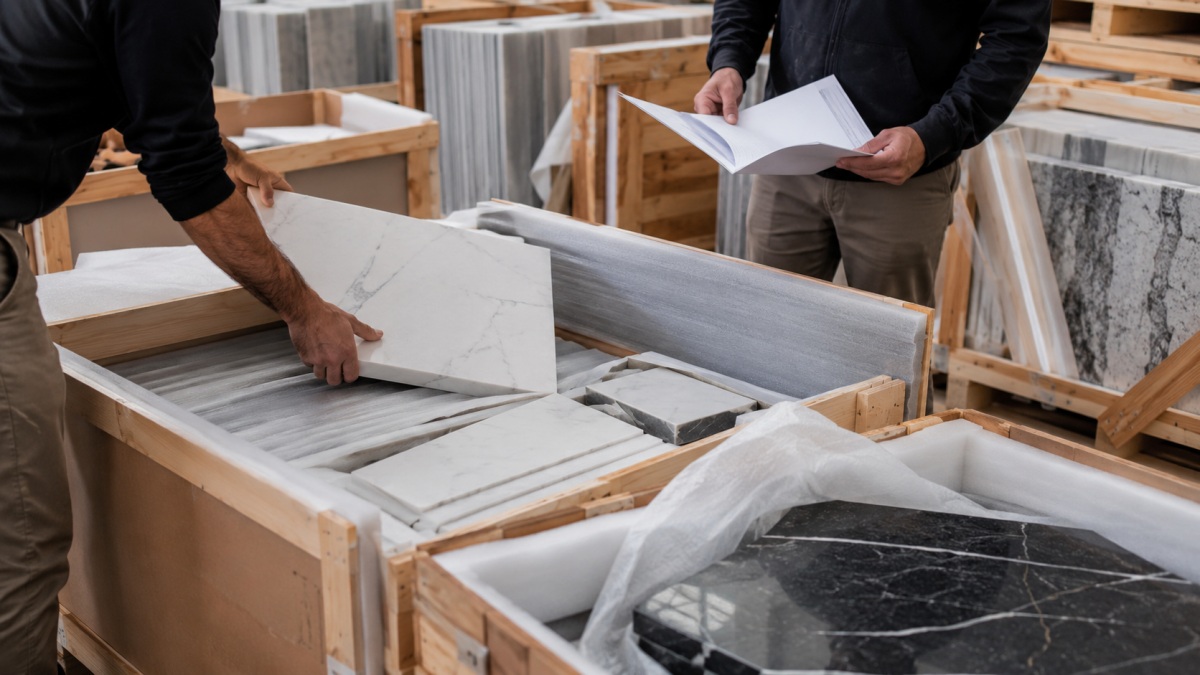
1. Verifique as caixas antes de abri-las.
A primeira inspeção deve ocorrer antes da abertura das caixas.
Compradores e empreiteiros devem verificar se os números das caixas, as marcas de envio, o nome do projeto, os números dos cômodos, os códigos de área e a lista de embalagens correspondem aos documentos do pedido. Se o projeto incluir diversas áreas, como pisos de hall de entrada, bancadas de banheiro, peças de escada, painéis de parede ou balcões de recepção, a equipe de recebimento não deve tratar todas as caixas como uma única remessa.
O objetivo é simples: confirmar o que chegou, a que pertence e se algo parece anormal antes de desembalar.
Procurar:
* estruturas de caixas danificadas
* cantos amassados
* alças soltas
* placas de proteção quebradas
* marcas de envio ausentes
* rótulos de embalagem pouco claros
* sinais de que as caixas foram abertas durante o transporte
* Números de caixas diferentes dos listados na lista de embalagem
Nessa fase, o comprador ainda não está avaliando a beleza da pedra. A primeira questão é se as condições de entrega são suficientemente controladas para garantir a desembalagem segura.
Para encomendas maiores, esta etapa deve estar relacionada com o processo geral. coordenação do fornecedor de pedra do projeto, porque os problemas de instalação muitas vezes decorrem da má separação entre materiais, desenhos, salas e áreas do local.
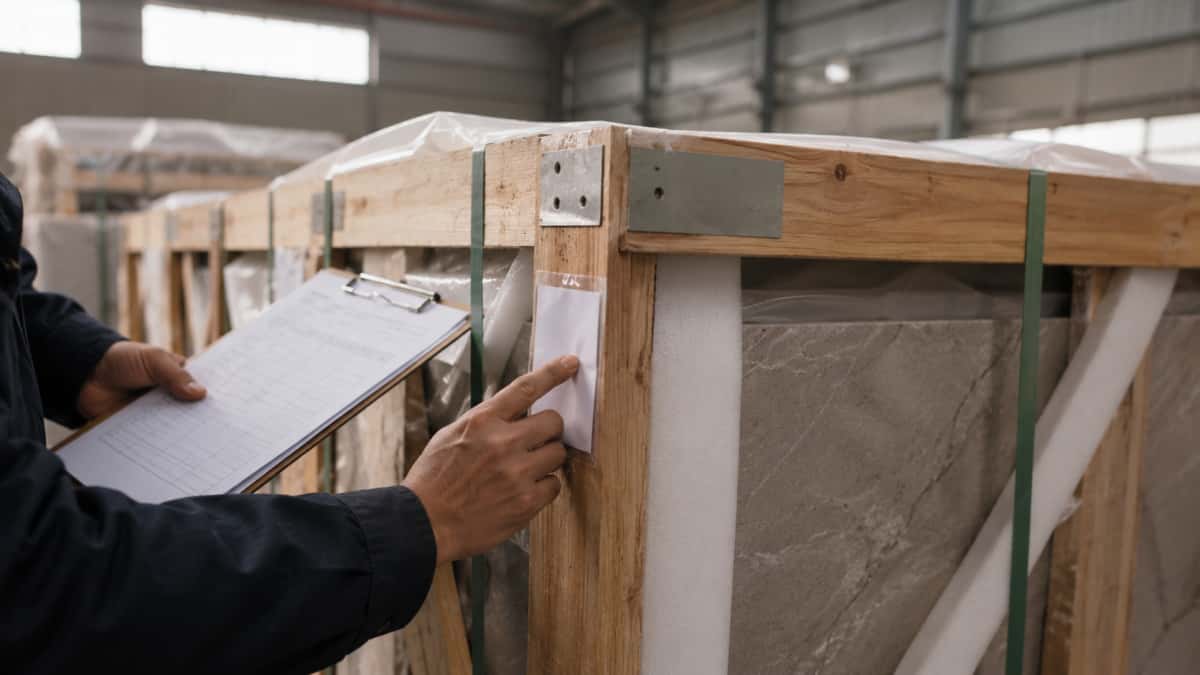
2. Abra as caixas com cuidado e documente o processo.
Um processo de desembalagem apressado pode danificar a pedra e gerar dúvidas quanto à responsabilidade.
Antes de abrir os engradados, a equipe no local deve preparar uma área limpa e seca, pessoal suficiente, ferramentas de elevação seguras e um telefone ou câmera para documentação. Fotos devem ser tiradas antes da abertura, durante a abertura e depois que as peças estiverem visíveis.
Não precisa ser um relatório complicado. Mas deve criar um registro claro.
Boas fotos devem mostrar:
* condição de caixa completa
* número ou marca da caixa
* embalagem protetora
* primeiros pedaços de pedra visíveis
* Quaisquer tábuas quebradas ou marcas de impacto
* a condição dos cantos e arestas
* peças após a remoção da caixa
Caso sejam detectados danos, o comprador deve parar e documentá-los antes de mover qualquer coisa. Uma vez que as peças estejam espalhadas pelo local, torna-se muito mais difícil determinar se os danos ocorreram durante o transporte, descarregamento, desembalagem, armazenamento ou manuseio na instalação.
Para projetos com peças cortadas sob medida, a inspeção de chegada deve estar relacionada aos desenhos do fornecedor, às notas de fabricação e capacidade de fabricação de pedraIsso porque a equipe receptora precisa saber não apenas qual é o material, mas também como cada peça foi feita e onde ela deve ser instalada.
3. Confirme a quantidade antes de avaliar a qualidade.
Muitas equipes de obra cometem o mesmo erro: começam verificando as cores e a qualidade da superfície antes de confirmar a quantidade.
A quantidade deve vir em primeiro lugar.
A equipe de recebimento deve comparar a lista de embalagem com as peças reais. Para placas, verificar a quantidade e as dimensões. Para ladrilhos, verificar a quantidade por caixa e o tamanho. Para peças cortadas sob medida, verificar os números das peças, os códigos dos ambientes, os detalhes das bordas e os formatos especiais. Para bancadas, tampos de lavatório, escadas, painéis de parede e medalhões, cada item deve corresponder ao conjunto de desenhos.
Isso não se trata apenas de contabilidade. Afeta a sequência de instalação.
A falta de um degrau, de uma bancada errada ou de um painel de parede pode atrasar a obra de toda uma área. Além disso, a peça de reposição que falta pode ser mais difícil de encontrar posteriormente, principalmente se for mármore ou calcário natural.
Uma lista de verificação prática para recebimento de mercadorias deve incluir:
* número total de caixas
* número total de placas, ladrilhos ou peças cortadas
* tamanho e espessura
* terminar
* código de localização
* número da peça
* referência de desenho
* detalhes especiais de borda ou furo
* peças sobressalentes, se incluídas
Problemas de quantidade devem ser relatados antes do início da instalação. Uma vez que parte do material já esteja fixada no local, a equipe do projeto perde flexibilidade.
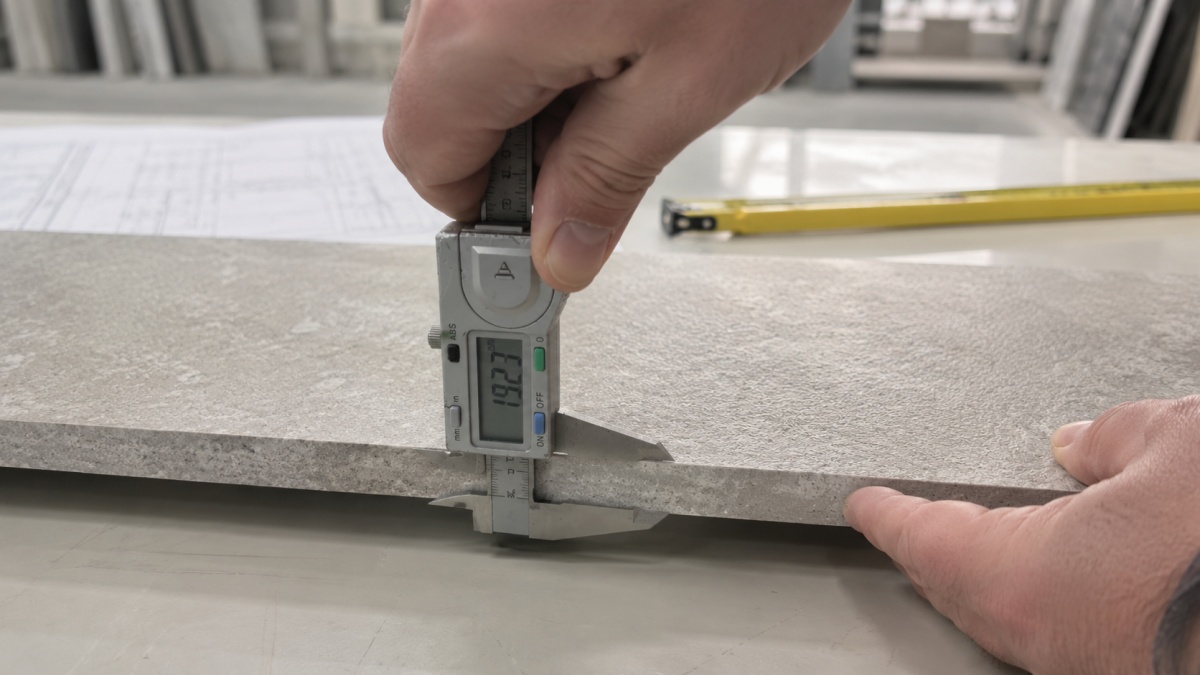
4. Verifique o tamanho, a espessura, o acabamento e os detalhes das bordas.
Após a confirmação da quantidade, a próxima etapa é a verificação técnica.
Para placas e ladrilhos, os compradores devem verificar o tamanho, a espessura, o acabamento da superfície e as tolerâncias gerais esperadas. Para peças cortadas sob medida, a equipe também deve verificar os perfis das bordas, furos, ranhuras, recortes para pias, bordas de degraus, dimensões dos painéis de parede e qualquer fabricação especial.
Essa etapa é importante porque a pedra pode parecer visualmente aceitável, mas ainda assim criar problemas de instalação.
Exemplos:
* Uma bancada de banheiro pode ter a cor correta, mas a posição do furo da torneira estar incorreta.
* Um degrau pode parecer bom, mas ter o acabamento da borda incorreto.
* Um painel de parede pode ter um acabamento aceitável, mas o tamanho estar errado.
* Uma bancada pode ter o comprimento correto, mas não corresponder ao recorte aprovado.
* Um azulejo para piso pode ser visualmente adequado, mas entregue com a espessura errada.
É aqui que os compradores devem ter calma. A pedra é pesada, difícil de manusear no local e frequentemente envolve outros serviços, como metalurgia, marcenaria, impermeabilização, iluminação, elevadores, portas e sistemas de parede.
A instalação não deve começar até que as dimensões críticas sejam confirmadas.
## 5. Compreender a lógica de inspeção específica do material
Uma inspeção séria de pedras não pode usar um único padrão para todos os materiais.
Materiais diferentes exigem julgamentos diferentes.
Mármore natural
O mármore natural deve ser inspecionado levando-se em consideração suas variações naturais. Veios, manchas, fósseis, variações de tonalidade e diferenças entre os blocos fazem parte do material. O comprador não deve esperar que todas as peças sejam idênticas.
A verdadeira questão da inspeção é outra:
O material entregue corresponde à gama aprovada?
Para materiais de projeto em mármore naturalA equipe de instalação deve verificar a direção da tonalidade, o movimento dos veios, a ordem de disposição a seco, o espelhamento ou os requisitos de layout e se as peças de alta visibilidade estão posicionadas corretamente. A variação natural pode ser bela quando planejada. Torna-se um problema quando as peças são instaladas aleatoriamente, sem controle de layout.
Granito
O granito geralmente é escolhido por sua resistência, durabilidade e praticidade. A inspeção deve se concentrar na uniformidade do acabamento, condição das bordas, lascas na superfície, danos nos cantos, precisão dimensional e se o material é adequado ao ambiente pretendido.
Embora o granito possa ser mais tolerante do que o mármore em muitas áreas de uso intenso, isso não significa que deva ser instalado sem verificação prévia. O granito escuro, por exemplo, pode evidenciar com mais clareza lascas nas bordas ou diferenças de acabamento sob forte iluminação.
Mármore artificial / mármore aglomerado
O mármore artificial e o mármore aglomerado são projetados para oferecer maior controle sobre a cor e a consistência dos padrões do que muitas pedras naturais. No entanto, os compradores ainda devem inspecionar a tonalidade do lote, a distribuição das partículas, o acabamento da superfície, a qualidade das bordas e a numeração das peças.
Para mármore artificial e materiais de mármore aglomeradoA inspeção deve se concentrar em verificar se as peças entregues correspondem à amostra aprovada e à aplicação pretendida. Esses materiais são frequentemente usados em interiores comerciais, pisos, paredes, bancadas e peças cortadas sob medida, onde a consistência visual é importante em grandes áreas.
Pedra de quartzo
A pedra de quartzo é comumente usada em bancadas, tampos de lavatório, ilhas de cozinha, balcões comerciais e superfícies internas. A inspeção de recebimento deve verificar a consistência da superfície, a espessura, os recortes, o polimento das bordas, a proteção dos cantos e se as placas ou tampos pré-fabricados correspondem ao desenho.
Para superfícies de projeto em pedra de quartzoOs compradores também devem verificar se o material está sendo usado no ambiente adequado. O quartzo é um material resistente para superfícies internas, mas a exposição externa, as condições de calor e o contato com produtos químicos devem ser discutidos antes da especificação, e não descobertos após a chegada do produto.
Pedra terrazzo
A pedra terrazzo deve ser verificada quanto à distribuição dos agregados, acabamento da superfície, uniformidade da tonalidade, tamanho, espessura e proteção dos cantos. Como os padrões do terrazzo são formados por lascas e agregados, o comprador deve inspecionar se o conjunto visual apresenta equilíbrio após a colocação de várias peças.
A inspeção não deve exigir repetição perfeita. Deve confirmar que a área instalada terá uma aparência controlada, intencional e adequada ao projeto.
Pedra sinterizada
A pedra sinterizada geralmente é encontrada em painéis de grandes dimensões e em formatos mais finos. A inspeção deve focar nos cantos, bordas, planicidade, condição da superfície e manuseio seguro. Painéis grandes podem exigir mais cuidado no levantamento e armazenamento do que ladrilhos comuns.
O ponto crucial não é apenas se o painel está visualmente correto. A equipe no local também deve confirmar se as condições de manuseio, corte e fixação estão adequadas antes da instalação.
Calcário
O calcário é um material natural com características próprias. Pode apresentar fósseis, marcas de conchas, poros e variações tonais sutis. A inspeção de recebimento deve confirmar se a superfície, o acabamento, a densidade e a gama de tonalidades correspondem à amostra aprovada e à aplicação desejada.
A pedra calcária deve ser avaliada com expectativas realistas. Não é pedra de quartzo, nem pedra sinterizada, nem mármore artificial polido. Seu valor reside no calor natural e na suavidade arquitetônica, mas o comprador deve compreender sua porosidade, comportamento após o acabamento e necessidades de manutenção.
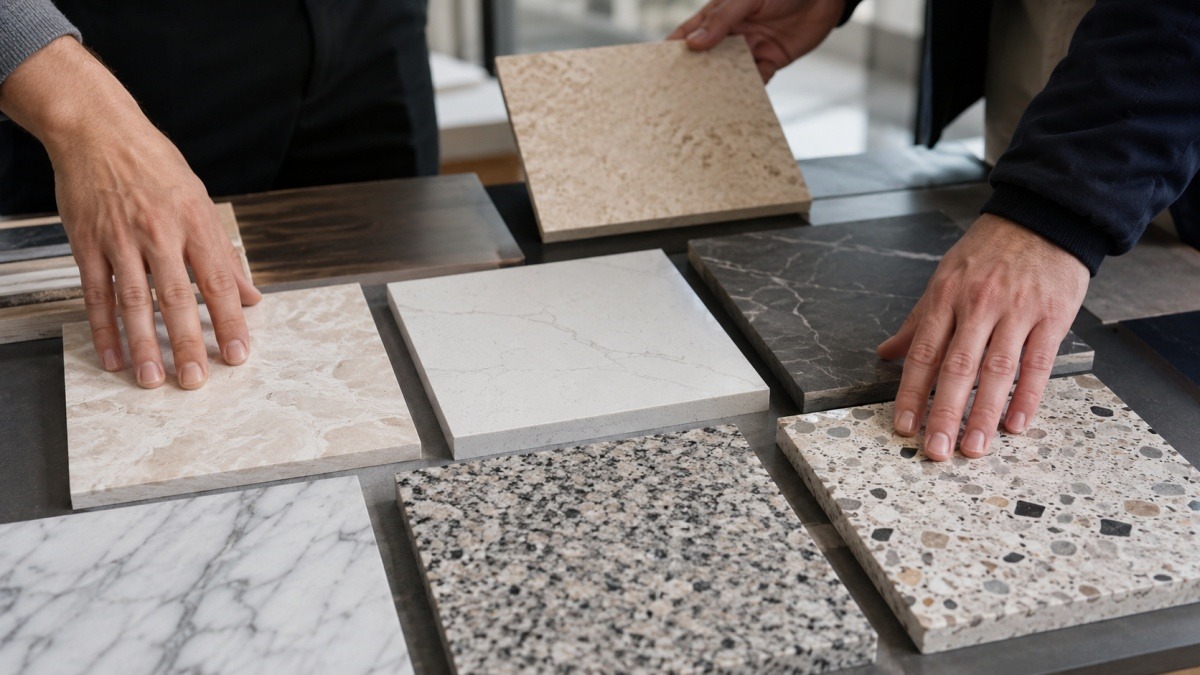
6. Verifique a cor e o padrão sob iluminação realista.
Problemas de cor são frequentemente exagerados ou passam despercebidos porque os materiais são verificados sob iluminação inadequada.
A aparência de uma superfície de pedra pode variar sob a luz de um armazém, em ambientes externos sombreados, sob luz interna quente, sob a iluminação de um hall de elevador, de um banheiro ou de um corredor de hotel. Antes de aprovar ou rejeitar o material, os compradores devem, sempre que possível, observar peças-chave sob condições de iluminação semelhantes às do ambiente de instalação final.
Isso é especialmente importante para:
* mármore branco
* calcário bege
* mármore artificial cinza
* granito escuro
* pedra de quartzo preto
* terrazzo com lascas mistas
* pedra sinterizada com textura sutil
* grandes painéis de parede
* mármore simétrico
* piso do saguão do hotel
Para mármore e calcário naturais, a gama de cores deve ser comparada com a gama de amostras aprovadas, e não com uma peça isolada. Para mármore artificial, pedra de quartzo e pedra sinterizada, o comprador deve verificar se a consistência do lote atende às expectativas do projeto. Para terrazzo, o equilíbrio geral do agregado é mais importante do que um pequeno aglomerado de partículas.
Uma boa inspeção não é emocional. É comparativa.
Compare os materiais entregues com:
* amostra aprovada
* fotos de laje
* fotos de produção
* Fotos de montagem a seco, se fornecidas
* layout de desenho
* código de quarto ou área
* condição de iluminação
* materiais vizinhos, como madeira, metal, vidro, tinta ou carpete
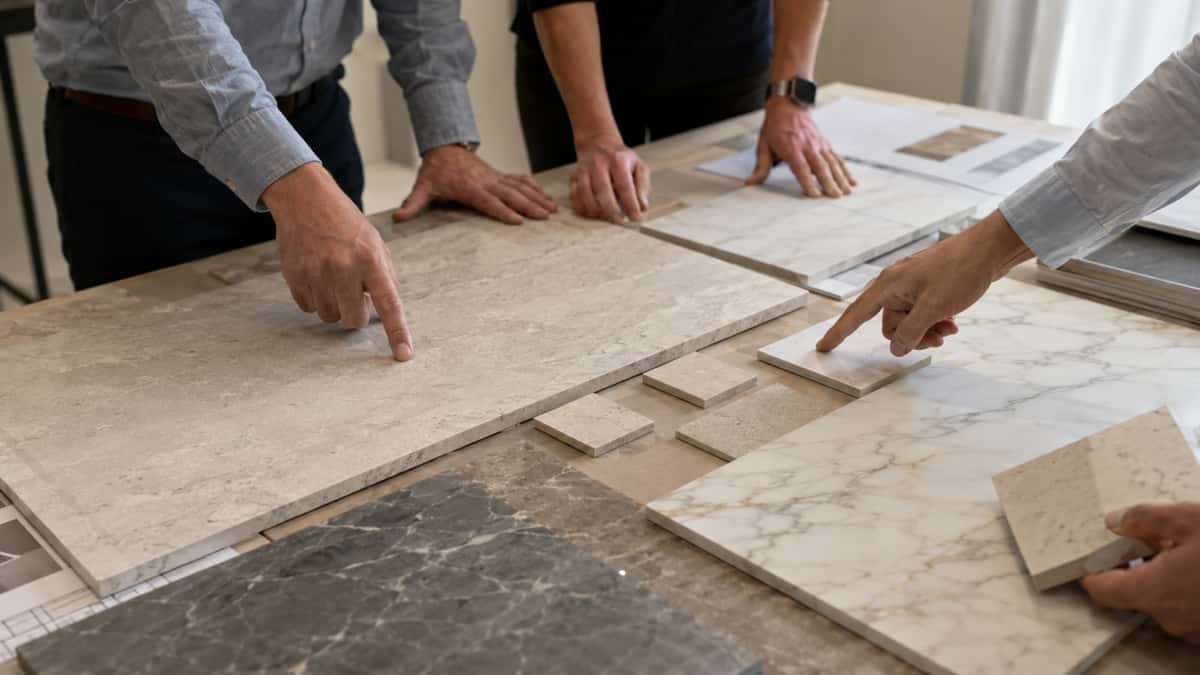
## 7. Inspecione os danos visíveis antes da instalação para ocultar as evidências.
A inspeção de danos deve ser realizada antes de qualquer corte, reparo, polimento ou ajuste no local.
A equipe de recebimento deve verificar cantos, bordas, superfícies polidas, furos, recortes, ranhuras e detalhes moldados. Danos devem ser registrados pelo número da peça e número da caixa. Se uma peça for essencial para uma área visível, ela deve ser separada e inspecionada antes da instalação.
Problemas comuns na chegada incluem:
* lascas de canto
* rachaduras nas bordas
* arranhões superficiais
* pedaços finos quebrados
* cantos recortados rachados
* aberturas de pia danificadas
* proteção de canto ausente
* polimento de borda incorreta
* contaminação superficial devido ao manuseio no local
* etiquetas de peças pouco claras
Nem todo pequeno problema exige substituição. Algumas lascas nas bordas podem ser reparadas, dependendo do material, da posição e da visibilidade final. Mas a decisão deve ser tomada antes da instalação, não depois que a peça já estiver fixada.
Um erro oculto ainda pode se tornar visível mais tarde.
8. Confirme a sequência de instalação antes de movimentar os materiais.
Após a chegada, muitos projetos ficam desorganizados porque os materiais são movidos para o andar, sala ou zona errada.
Isso pode ser perigoso em trabalhos de corte sob medida.
Uma peça de pedra polida para uma parede pode parecer semelhante a outra, mas ter um tamanho diferente. Peças para escadas podem ter orientações para a esquerda e para a direita. Bancadas de banheiro podem ter posições diferentes para as pias. Painéis de mármore com veios simétricos podem perder o efeito visual desejado se a sequência for quebrada.
Antes de movimentar os materiais, a equipe no local deve confirmar:
* Quais caixas pertencem a qual área?
* se a sequência de instalação está marcada
* se os rótulos ainda são legíveis
* onde cada material deve ser armazenado
* se peças pesadas necessitam de equipamentos especiais de elevação
* se as peças frágeis devem permanecer embaladas até serem necessárias
* se os instaladores entendem o sistema de numeração
Isso não é apenas uma questão de gestão do local. Faz parte do controle de qualidade da pedra.
Uma peça bem feita ainda pode ser instalada incorretamente se a equipe do projeto perder a sequência.
9. Mantenha os documentos disponíveis no local.
A equipe receptora não deve confiar apenas na memória ou em mensagens do WhatsApp.
No mínimo, o site deve manter a versão mais recente de:
* lista de embalagem
* fatura ou comprovante de entrega
* desenhos aprovados
* amostras aprovadas ou fotos de amostra
* especificação do material
* confirmar
* lista de numeração de peças
* plano da área de instalação
* fotos de inspeção
* Registre as observações caso sejam encontrados danos.
Em projetos internacionais, o controle de documentos torna-se ainda mais importante, pois o fornecedor, o comprador, o empreiteiro, o instalador e o proprietário podem estar em países diferentes. Quando surge um problema, uma documentação clara ajuda todos a entenderem a questão mais rapidamente.
Os compradores também devem manter-se relevantes. Certificados de pedra e documentos do projeto relacionado ao pacote de materiais quando exigido pelo projeto, mercado, consultor ou empreiteiro.
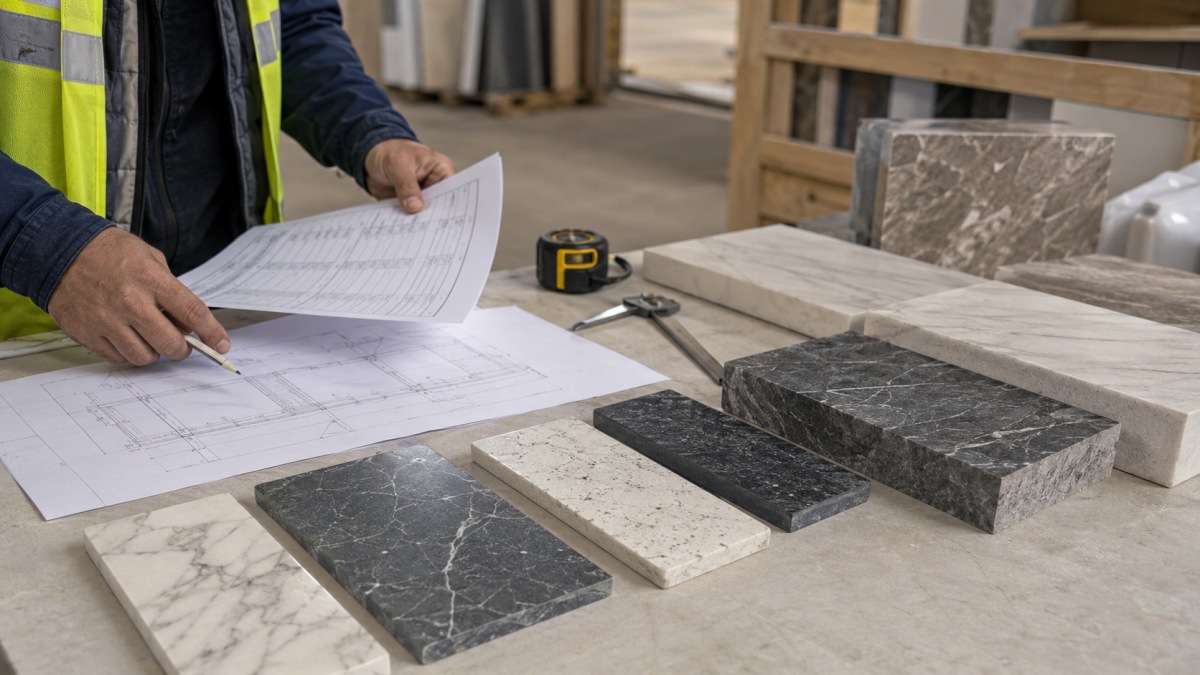
10. Não instale primeiro e discuta depois.
Um dos erros mais caros em projetos com pedra é instalar primeiro e verificar depois.
Uma vez instalada a pedra, qualquer discussão se torna mais complexa. O problema foi decorrente da produção, do transporte, do armazenamento na obra, do corte, do adesivo, do método de instalação, da limpeza, da proteção ou de danos posteriores? Sem os registros de inspeção na chegada, a resposta pode ser incerta.
Antes do início da instalação, o comprador ou o empreiteiro devem confirmar:
* o material está correto
* a quantidade está completa
* o acabamento está correto
* O tamanho e a espessura são aceitáveis
* a qualidade visível foi aprovada
* A sequência de layout está compreendida
* As peças danificadas são documentadas
* As peças questionáveis são separadas
* A equipe de instalação possui os desenhos mais recentes.
* O local está limpo, seco e pronto
Isso não atrasa um projeto. Impede o tipo errado de velocidade.
Uma instalação rápida sem inspeção pode economizar um dia, mas gerar semanas de disputa.
11. Quando o comprador deve entrar em contato com o fornecedor?
O comprador deve entrar em contato com o fornecedor imediatamente se houver uma discrepância evidente, quantidade faltante, quebra significativa, acabamento incorreto, tamanho errado, rotulagem pouco clara ou qualquer problema com o material que afete as decisões de instalação.
A melhor comunicação inclui:
* número da caixa
* número da peça
* área do projeto
* fotos nítidas
* vídeo curto, se útil
* referência da lista de embalagem
* referência de desenho
* descrição do problema
* se a instalação foi iniciada
* se a peça está visível ou oculta
* se a solicitação for de substituição, reparo ou aprovação
Um fornecedor não consegue resolver rapidamente uma mensagem vaga. "A pedra tem problemas" não é suficiente.
Uma mensagem mais específica seria útil: “Caixa 6, peças W-12 e W-13, área da parede do hall de entrada, ambas com cantos visíveis lascados antes da instalação. Fotos anexas. Por favor, verifique se essas peças podem ser reparadas ou se precisam ser substituídas.”
Esse tipo de comunicação protege ambos os lados.
Para compradores que ainda estão planejando um projeto e desejam reduzir o risco na fase de recebimento antes do início da produção, eles podem Entre em contato com Aoli Stone para revisão do projeto. e confirmar antecipadamente a seleção de materiais, os desenhos de fabricação, a lógica de embalagem e os pontos de inspeção.
## 12. Uma lista de verificação prática para inspeção de chegada de compradores de pedra
Antes da instalação, os compradores devem consultar a seguinte lista de verificação:
1. Todas as caixas estão presentes?
2. Os números das caixas correspondem à lista de embalagem?
3. As marcas de envio estão legíveis?
4. Há danos visíveis na caixa?
5. Foram tiradas fotos antes de desembalar?
6. A desembalagem foi feita com cuidado?
7. A quantidade corresponde ao pedido?
8. As dimensões e espessuras correspondem aos desenhos?
9. O acabamento está correto?
10. Os detalhes das bordas estão corretos?
11. Os furos, recortes, ranhuras e perfis estão corretos?
12. As cores e os padrões correspondem à gama aprovada?
13. Variações naturais são aceitáveis para esse tipo de material?
14. As peças danificadas são documentadas por número?
15. Os rótulos ainda são legíveis?
16. A sequência de instalação está clara?
17. As peças questionáveis estão separadas?
18. Os documentos estão disponíveis no local?
19. O fornecedor foi informado antes da instalação, se necessário?
20. A equipe do projeto aprovou a instalação?
Esta lista de verificação é simples, mas pode evitar muitos problemas comuns em projetos.
## Eis a consideração final
A inspeção na chegada das pedras não tem como objetivo encontrar problemas. Trata-se de proteger o projeto antes que os problemas se tornem permanentes.
O mármore natural exige controle de layout e variação. O granito requer verificação de acabamento, borda e dimensões. A pedra de quartzo exige confirmação da superfície, recorte e uso em interiores. O mármore artificial e o mármore aglomerado exigem revisão de tonalidade do lote e aplicação. A pedra terrazzo requer controle de agregados e acabamento. A pedra sinterizada requer manuseio cuidadoso e inspeção de painéis. O calcário requer avaliação realista da textura natural, poros e comportamento do acabamento.
Um comprador sério não espera a instalação estar concluída para decidir se o material é aceitável.
O momento certo para verificar a pedra é quando ela chega, antes de ser fixada, cortada novamente, polida no local ou misturada com outros materiais utilizados em diferentes trabalhos.
É aí que muitos riscos em projetos com pedra ainda podem ser controlados.



 IPv6 SUPORTADO POR REDE